Most Frequent Topics and Key Tips for TYT Physics

TYT Physics Strategy: Balancing Knowledge and Reasoning
In TYT, the first stage of university entrance exams, physics questions measure candidates' basic science literacy and their ability to process daily physical phenomena through a scientific lens. This small but high-impact section of 7 questions often intimidates students due to a perceived 'difficulty,' yet it is actually one of the most logical ways to gain points. Successful TYT preparation isn't about memorizing every formula; it's about grasping the core working principles of natural systems. Physics is the mathematical language of the universe, and candidates who read this language correctly gain time and stay ahead of the competition. In this guide, we examine the units forming the backbone of TYT and the indispensable question patterns of OSYM from an academic perspective.
Matter and Its Properties: The Identity Card of Substance
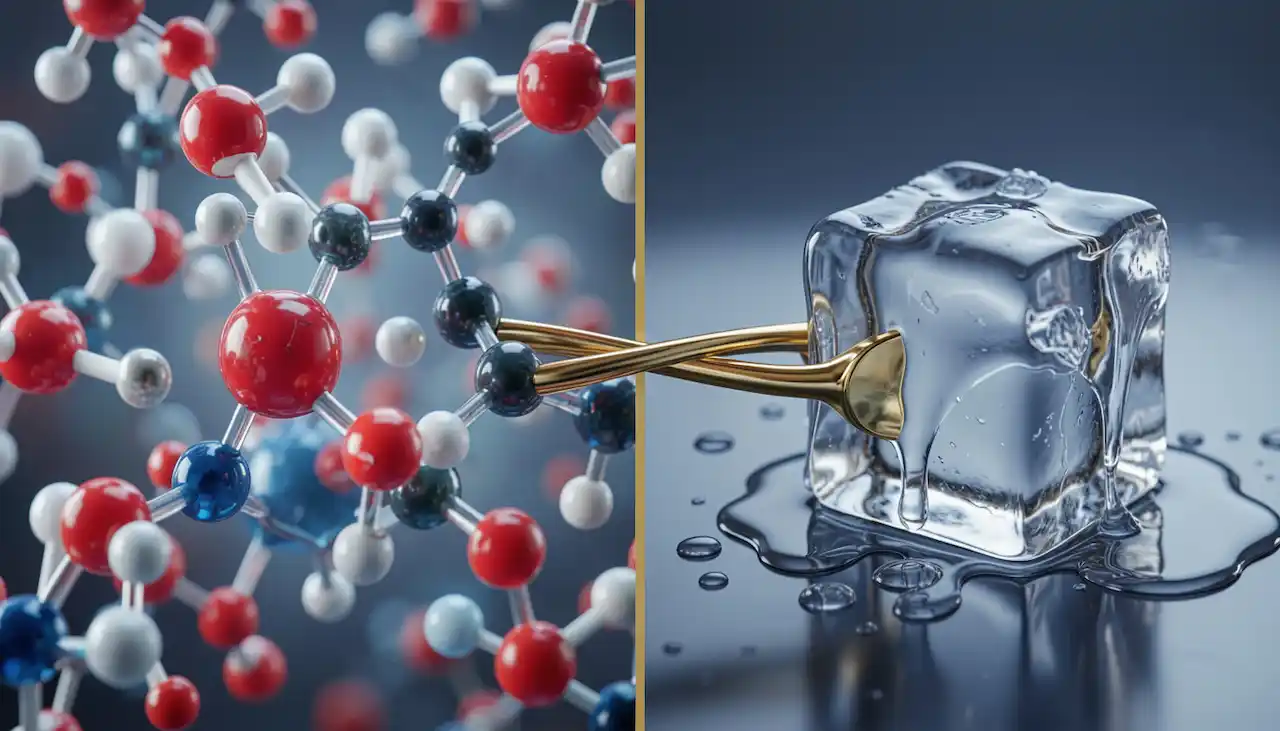
The Matter and Its Properties unit, the starting point of physics, is a foundational subject that appears every year. Concepts like density, durability, adhesion, and cohesion are questioned not just as definitions, but through their real-life reflections (capillarity, surface tension, etc.). Understanding the characteristic behaviors of liquids and gases is vital for comprehending the physical basis of transitions between states of matter. In an academic study plan, analyzing these concepts not just through formulas ($d=m/V$) but at the level of intermolecular interaction forces will prevent you from making mistakes in the new generation 'interpretation-based' questions.
Heat, Temperature, and Expansion: The First Step of Thermodynamics
The Heat and Temperature topic, which also shares common ground with TYT Geography, is one of the most 'selective' areas of the exam. Questions built around heat capacity, specific heat, thermal equilibrium, and methods of heat transfer (conduction, convection, radiation) often test candidates' misconceptions. A mind that hasn't fully digested that temperature is not energy but a measure of molecular kinetic energy, and that heat is the energy being transferred, is destined to fall into the traps of this unit. Relating the differences in expansion coefficients to engineering examples in daily life (rails, bridges) ensures the transfer of knowledge to long-term memory.
Motion and Force: Analyzing Mechanical Foundations
This section, where dynamic and kinematic concepts blend, is where the numerical-verbal balance of TYT is best established. The vectorial difference between speed and velocity, accelerated motion graphs, and Newton’s laws of motion (Inertia, Fundamental Principle, Action-Reaction) constitute the 'staple' questions of the exam. Analyzing the roles of friction force as either a hindrance or a catalyst for motion offers you a strategic advantage in solving mechanical problems. Grasping that the $F_{net}=m \cdot a$ equation is not just a mathematical equality but the constitution of every physical interaction in nature will carry your success rate above 90%.
Electricity and Magnetism: Circuit Analysis and Power
Questions on electric current, potential difference, resistance, and bulb brightness represent the most technical part of TYT physics. Questions based on Ohm’s law ($V=I \cdot R$) and circuit connection types (series-parallel) test the candidate’s analytical thinking. Visualizing bulb brightness as proportional to power and imagining the distribution of power in a circuit through a water plumbing analogy helps simplify complex circuits. In the magnetism part, carving the properties of magnets and magnetic field lines into your mind like a visual diagram will act as a cognitive anchor, preventing errors in direction-finding questions.
Pressure and Buoyancy: Fluid Mechanics
Solid, liquid, and gas pressure along with the Archimedes principle (buoyant force) are the units OSYM loves to turn into scenarios the most. Rules such as pressure being inversely proportional to surface area, or the relationship of liquid pressure with depth and density, have wide application areas from dams to hydraulic systems. In buoyancy questions, one must grasp that magical balance between the weight of the object and the weight of the displaced liquid. Analyzing the states of 'floating, suspended, and sinking' objects by drawing force diagrams (free body diagrams) will carry your success in physics to an academic level.
Waves: The Physical Rhythm of Sound and Earthquakes
Wave mechanics requires a total understanding of period, frequency, wavelength, and speed concepts. Studying the characteristic properties of string, water, sound, and light waves comparatively allows you to solve the 'which one is a distinguishing feature?' questions in the exam. The speed and timbre of sound, types of earthquake waves, and the hierarchy of the electromagnetic spectrum are 'point reservoirs' located at the end of TYT that should not be neglected. Seeing waves as a form of energy transmission allows you to understand the philosophy of the subject.
Conclusion: Points Earned Through Physical Reasoning
In conclusion, TYT Physics is not just a pile of formulas, but a summary of the effort to understand the universe. When you view topics as a holistic system of interconnected parts rather than independent pages, your success will be inevitable. Without breaking away from academic discipline, you can successfully complete this marathon with diagrams supporting visual memory and plenty of 'new generation' question practice. Remember, physics questions are difficult because they demand not just 'knowledge,' but also 'attention' and 'logic.' Every candidate who combines these three will achieve the result they desire. Now is the time to activate your physical thinking skills.
TYT AYT Physics: Topics & Formulas — Experience This Now
Download our app to explore all these features and more.