Most Frequent Topics in TYT Chemistry and Practical Strategies

Define Your Exam Strategy: Fundamental Dynamics of TYT Chemistry
In TYT, the first stage of the university entrance marathon, chemistry questions measure candidates' basic scientific literacy and their ability to interpret chemical processes in daily life. This small but critical 7-question section plays a 'time-saving' role within the science test. Successful TYT preparation requires focusing on the core units that have become indispensable classics for OSYM every year, rather than looking superficially at the entire curriculum. Chemistry is not just about memorizing formulas, but about understanding the nature of matter and atomic-level interactions within a conceptual framework. In this guide, we detail the academic priorities and study methodologies that will directly impact your scores.
Interactions Between Chemical Species: The Building Block of Matter
The most vital and annually questioned topic in TYT Chemistry is Interactions Between Chemical Species. Classifying these interactions, which determine the physical and chemical properties of matter, into strong (ionic, covalent, metallic) and weak (van der Waals, hydrogen bonds) forms the skeleton of the subject. Knowing the definitions alone is not enough; being able to determine the polarity or apolarity of a molecule allows you to predict properties such as solubility and boiling point. With an academic approach, mastering Lewis structure drawings is the most solid way to embed the logic of bond formation in the mind. Strong bonds determine chemical change, while weak bonds determine physical states.
States of Matter and the Foundation of Gas Laws
Transformations between solid, liquid, and gas phases, along with the characteristic properties of these states, are another indispensable part of the exam. Particularly, grasping the inverse and direct proportions between properties of liquids such as viscosity, vapor pressure, and boiling point reduces the margin of error in interpretation questions to zero. In the States of Matter unit, knowing the general behaviors of gases (pressure, volume, temperature relationship) at a theoretical level builds a strong bridge to AYT chemistry. Recent learning outcomes including daily life examples and properties of the plasma state have been among OSYM's distinguishing question types in recent years.
Chemistry as a Science and the Modern Anatomy of the Atom
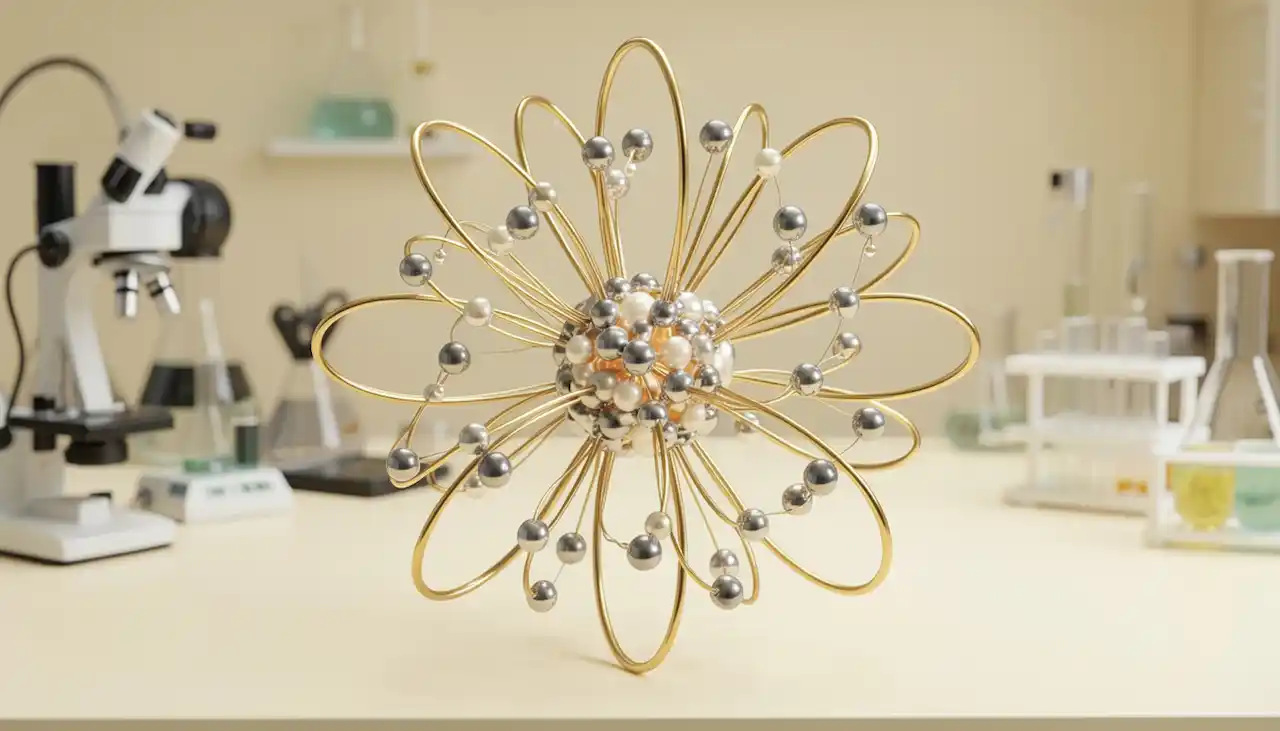
The 'Chemistry Science' and 'Atom and Periodic System' units, which form the introduction of the exam, may seem easy but require terminological attention. This section, covering the transition from alchemy to chemistry, laboratory safety symbols, and basic chemistry disciplines, offers the candidate 'guaranteed points.' However, knowing the evolutionary differences between Atomic Models and pre-quantum basic atomic theories (Dalton, Thomson, Rutherford, Bohr) provides a historical perspective. Carving the periodic trends of properties that change from left to right and top to bottom in the periodic table (ionization energy, atomic radius, electronegativity) into your mind like a graph is the key to table questions.
Mixtures and Separation Techniques
The separation of homogeneous and heterogeneous mixtures forms the basis of industrial processes and is frequently asked in the exam as a 'laboratory application.' It is necessary to analyze which physical difference (boiling point, particle size, solubility) techniques such as distillation, filtration, dialysis, or extraction are based on. The concepts of Solubility and Concentration, when combined with mass percentage calculations, also test the candidate's numerical processing ability. Interpreting the properties of mixtures through colligative properties (freezing point depression, etc.) explains the scientific background of daily life examples like pouring salt on roads in winter.
Chemical Balance of Acids, Bases, and Salts
The general properties of acids and bases, color changes of indicators, and most importantly, the structure of salts formed as a result of acid-base reactions, is one of the technical sections of TYT. It is necessary to know the logarithmic logic of changes on the pH scale and the interactions of acidic/basic substances in daily life (soap, lemon juice, bleach). Especially Reactions of Metals with Acids is a 'selective' sub-heading that questions which metal (active, semi-noble, noble) causes gas release with which acid. Information mastery in this section carries the candidate one step forward in laboratory questions.
Nature and Chemistry: Ecological Literacy
One of the final units of the curriculum, Nature and Chemistry, covers current issues such as environmental pollution, water hardness, and air pollutants. This section measures the candidate's level of ecological literacy. Knowing the chemical formulations of the greenhouse effect, ozone depletion, and acid rain in general terms earns points in the verbal part of the exam. The awareness that chemistry is not only in the laboratory but also in the air we breathe and the water we drink completes the philosophical dimension of the course. An environmentally sensitive vision of chemistry is also among the main goals of modern education.
Conclusion: Holistic Chemistry Consciousness and Success
In conclusion, the way to be successful in TYT Chemistry is to see the topics not as disconnected pages, but as parts of a complementary order. A study plan supported by abundant visual materials without breaking away from academic discipline is the only way to get 7 out of 7. Chemistry is the art of recognizing matter and making sense of the world; those who can practice this art not only find the correct option in the exam but also gain a scientific way of thinking. The process, supported by regular practice exams and missing topic analyses, is the most powerful catalyst that will lead you to your targeted future.
TYT AYT Chemistry: Topics & Formulas — Experience This Now
Download our app to explore all these features and more.