TYT AYT Humanities Study Notes: Literature, History, and Geography Analysis

Humanities Success Guide: Integrating the Liberal Arts
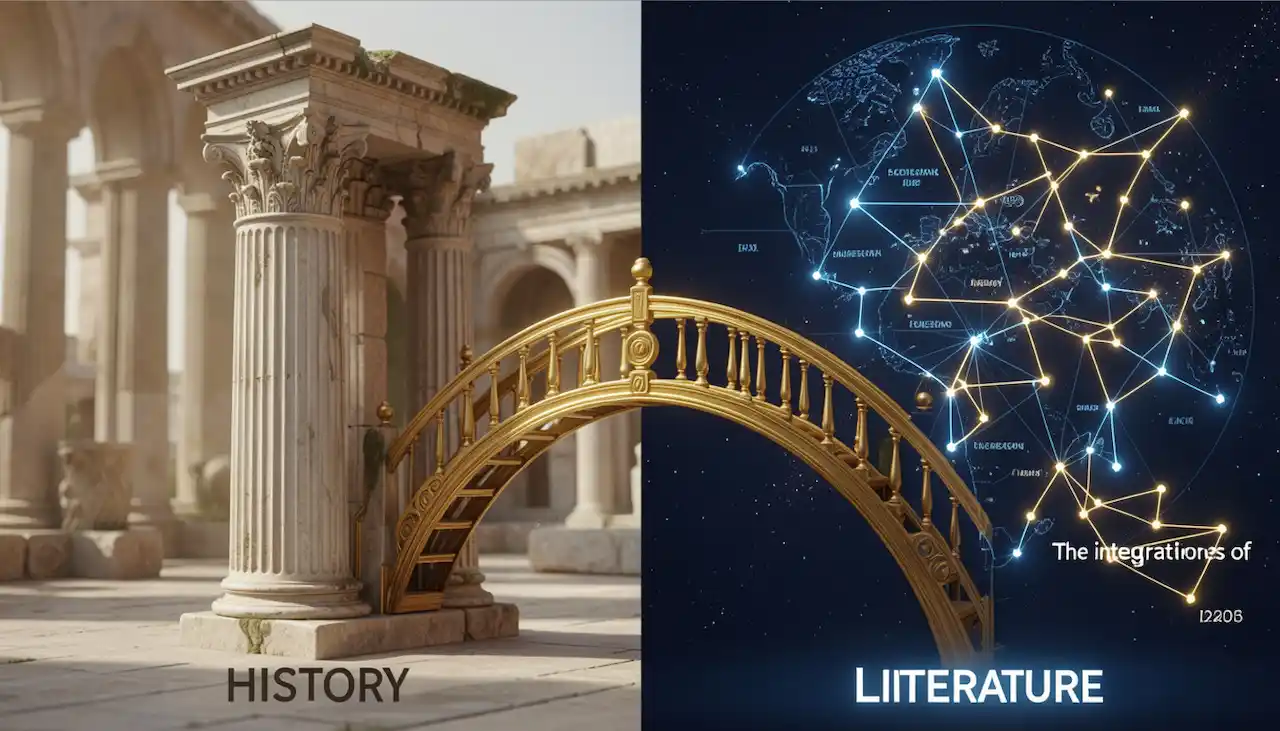
In the marathon of the TYT and AYT university entrance exams, humanities courses measure more than just a candidate's knowledge level; they test the ability to analyze texts, establish cause-and-effect relationships, and synthesize information. Grasping the organic bond between Turkish Language and Literature, History, and Geography transforms a student's verbal intelligence into academic power. From an academic perspective, it is impossible to fully analyze a literary work without knowing the political history of the era in which it was written. Similarly, the physical conditions of a geography directly influence the flow of historical events and the cultural accumulation in that region. In this guide, we examine the critical learning outcomes that form the backbone of humanities courses and their place in exam scenarios with academic precision. Success begins with the ability to see knowledge not in fragments, but as pieces of a whole.
Turkish Language and Literature: Aesthetic and Structural Analysis
The AYT Literature test is the section where candidates often feel most crushed under the 'weight of memorization.' However, success comes not from randomly memorizing thousands of work-author names, but from understanding the 'spirit of the time' (zeitgeist) within literary movements and periods. Throughout this long journey from pre-Islamic times to modern Turkish literature, every era has its own linguistic aesthetic and social message. For instance, the fact that Tanzimat literature was shaped around the concepts of rights, liberty, and justice is a reflection of the socio-political changes of the period. An academic study of literature should combine novel summaries with character analyses and view poetry knowledge—such as verse forms and meter—not merely as technical rules, but as tools for emotional expression.
History: Transitioning from Chronology to Logical Sequence
For many students, History might seem like a branch consisting only of dates and names, but it is actually a chain of 'events and facts.' While TYT History questions are generally interpretation-oriented, AYT History requires a deeper mastery of knowledge. In the process spanning from the first Turkic states to the Ottoman Empire and onto the history of the Republic, analyzing why states rose or collapsed is an academic necessity. Developing historical empathy provides candidates with a strategic advantage when interpreting the premises of a question. Reading history not as a pile of past events, but as the source of decisions shaping today's world, is the fundamental key to exam success.
Geography: The Dynamic Balance Between Human and Nature
The Geography curriculum in TYT and AYT covers both physical and human systems. The impact of natural events on human activities and the process of how humans shape nature constitute the core philosophy of geography. Map literacy (cartography) is the skill that causes the most marks to be lost in the exam, yet creates the biggest difference when studied correctly. Candidates who can visualize climate types, vegetation, landforms, and population policies on a world map can solve complex interpretation questions in seconds. In human geography, analyzing contemporary issues such as globalization, transportation networks, and environmental problems with academic data is the most important element that broadens a candidate's vision.
Cognitive Encoding and Studying with Mind Maps
To transfer the massive data load of humanities courses into long-term memory, mind maps and mnemonic encodings are invaluable tools. Working by visualizing a sultan's reign, a writer's works, or the characteristics of a climate zone increases the speed of information retrieval. The human brain prefers working through relational networks rather than disconnected data. For example, encoding the literature of the Servet-i Fünun period by associating it with the oppressive political atmosphere of the time (History) and the enclosed spaces of Istanbul (Geography) ensures that the information is sealed in the mind. Humanities course notes should not just consist of text; they should carry the quality of an information architecture supported by diagrams and schemes.
Reading Culture and Paragraph Analysis Techniques
The greatest common skill across all branches of TYT and AYT is the capacity for 'reading comprehension.' For humanities students, the habit of reading books is not just a hobby; it is a form of 'training' that increases reading speed and vocabulary for the exam. When solving paragraph questions, being able to identify the main idea, supporting thoughts, and narrative techniques is an academic competency. Following 'clue' words—such as 'however,' 'nonetheless,' or 'consequently'—allows you to trace the author's logical path. A candidate who masters all the possibilities of the language can analyze even the most complex philosophical or literary texts with the clarity of a mathematical problem.
Exam Psychology and Time Management Strategies
For humanities students, the biggest trap in the exam is the fallacy that 'there is plenty of time.' However, the length and density of verbal questions can rapidly deplete one's attention span. At this point, the Cycling Technique and stress management come into play. When experiencing a focus issue on a very long paragraph question, it is a strategic necessity to mark that question and move on, returning later with a rested mind. Students who can manage their emotional state during the exam and keep their prefrontal cortex active to maintain analytical decision-making will always stay ahead of candidates who panic despite high technical knowledge. In the humanities, time is the greatest fuel for attention.
Conclusion: Intellectual Depth and a Vision for Success
In conclusion, achieving success in TYT and AYT humanities courses is the product of systematic discipline and cultural curiosity. For a mind that learns not just to pass the exam, but to understand the world and humanity, these exams are not just obstacles, but arenas to prove potential. Solving regular subject trials, delving into the roots of mistakes, and developing a new intellectual perspective every day will bring you to your goal. Remember that the humanities are the story of mankind. Every student who reads this story correctly will be the master of the verbal atlas. Now, prepare your pens and books; start discovering the heritage of humanity today.

Verbal Hub: TYT AYT & KPSS Study Notes — Experience This Now
Download our app to explore all these features and more.