How to Improve English Pronunciation by Listening? A Phonetic Guide

The Secret of Correct Pronunciation: Listening to the Music of a Language
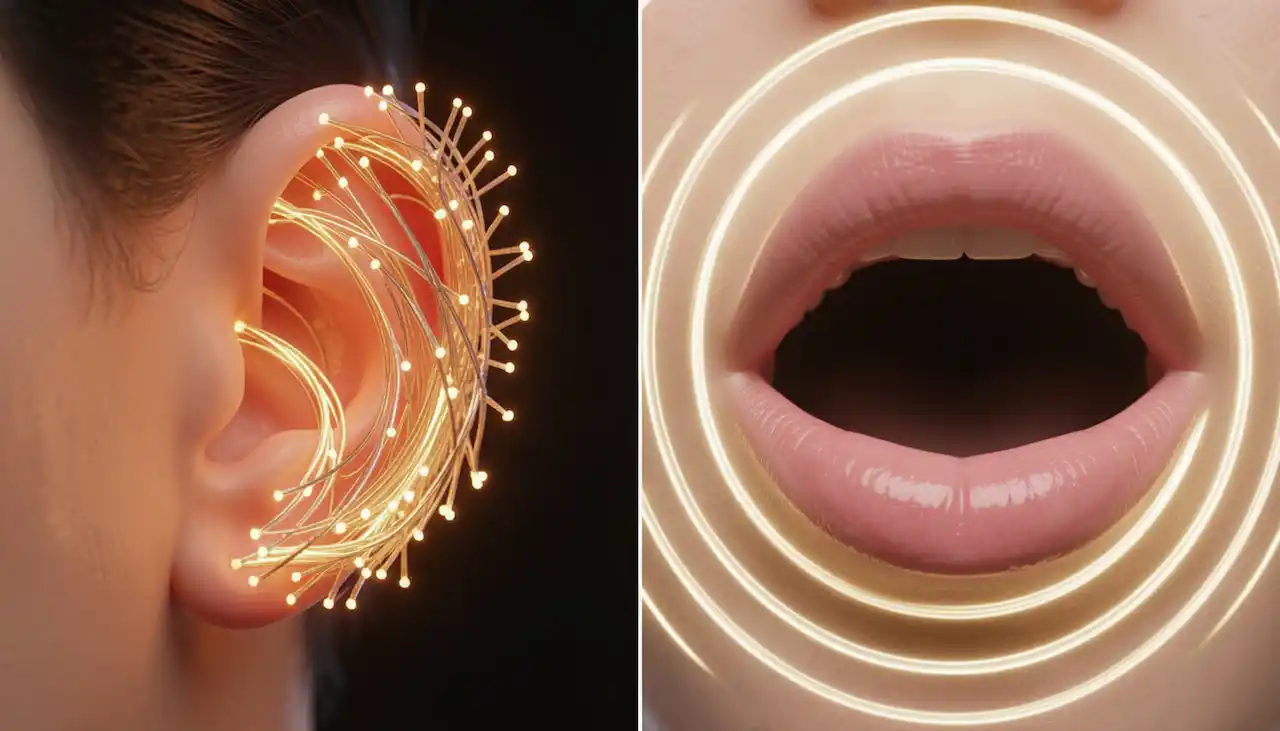
The biggest nightmare for English learners is not being understood while speaking even though they know the words. The main reason for this situation is that English is not a language that is 'read as it is written.' Explained academically by the science of phonetics, this situation shows that the relationship between letters (graphemes) and sounds (phonemes) is not one-to-one. Correct pronunciation is not just about lip movements; it is internalizing the rhythm, stress, and timbre—the music—of a language. Successful accent and pronunciation development begins with 'ear training' before the mouth. One who is not a good listener cannot be a good speaker.
Auditory Memory and the Importance of the Audio Model
In language learning, the sense of hearing is the channel that transmits information to the mind in its purest and rawest form. When you see a word for the first time, a 'pronunciation guess' forms in your mind; however, this guess is usually incorrect due to the influence of your native language (L1 interference). Therefore, a new word must absolutely be learned accompanied by an audio reference. Professional voiceovers allow you to notice the 'schwa' sound or swallowed syllables within the word. Listening to the word from an audio guide ensures that a correct file is opened in the phonetic center of the brain so it can recognize that word immediately upon hearing it in the future.
Stress and Intonation: The Traffic Signs of Language
In English, word stress can completely change the meaning. For example, when the word 'present' is stressed on the first syllable, it means 'gift,' and when stressed on the second syllable, it means 'to present.' Intonation within a sentence is an emotional map that reveals the speaker's intent (question, surprise, command). It is not enough just to pronounce words correctly; one must know which syllable is highlighted and which is dampened. Following the rise and fall of the speaker's pitch (intonation patterns) like a wave graph in listening exercises gives your speech a natural resonance.
The Shadowing Technique: Motor Memory Training
The most effective academic method for improving pronunciation is the Shadowing technique. In this method, while listening to a native English speaker, you repeat the same sentences with the same speed and stress just a second after them (like a shadow). This action is not only mental but also a physical 'motor memory' training. Your mouth muscles get used to the physical positions of sounds that are foreign to the language (for example, the 'th' or 'r' sounds). Shadowing adapts the brain to the speech speed and rhythm, preventing stuttering in real-life dialogues.
International Phonetic Alphabet (IPA) Literacy
Those strange symbols next to English words (IPA) are actually a universal coding system that allows you to read every language without error. Learning IPA symbols is like a musician learning to read notes. When you hesitate about the pronunciation of a word, by looking at the IPA code, you can see with mathematical certainty exactly how each sound (vowel or consonant) will come out. Phonetic literacy moves an individual to the level of an independent learner, freeing them from hearsay misinformation. Those small symbols in the dictionary are the compass of fluent English.
Minimal Pairs and Ear Sharpness Exercises
Pairs of words that look very similar but have different meanings, such as 'Sheep' and 'Ship' or 'Bad' and 'Bed,' are called minimal pairs. An ear that cannot distinguish these subtle sound differences cannot produce correct pronunciation. In audio exercises, listening to these pairs side by side and trying to detect the millimetric differences between them increases your ear sharpness. Language learning is a muscular discipline, and the eardrum is a part of this discipline. As you distinguish the frequency differences of sounds, you begin to notice and correct errors in your own speech with the precision of a sound engineer.
Recording and Self-Evaluation: Getting to Know Your Own Voice
Since humans hear their own voices through bone conduction, they cannot know exactly how they sound to the outside world. The most practical step that will revolutionize pronunciation is recording your own voice and then comparing it with the original sound. When you listen to your own voice like a stranger, you clearly see where you paused and which sounds you flattened. This self-evaluation process prevents errors from becoming permanent by creating cognitive awareness. In today's technology, a voice recorder can turn into the world's best pronunciation coach.
Conclusion: An Intelligibility Goal Beyond Accent
In conclusion, developing English pronunciation is not a matter of 'imitating an accent' but of 'producing correct and intelligible sounds.' You do not need to have a perfect British or American accent; however, following word stresses and basic phonetic rules is essential for gaining respect in the global world. You can overcome this hurdle by listening, repeating, and most importantly, immersing yourself in the unique music of the language. Remember that English is a language to which every nation in the world adds its own colors; reflect your own color with the clearest and most correct sounds. Fluent speech is the product of a brave heart and a trained ear.

3000 English Flashcards: Audio Pronunciation & Examples — Experience This Now
Download our app to explore all these features and more.