Home-Based English Pronunciation Study Techniques: A Cognitive Methodology
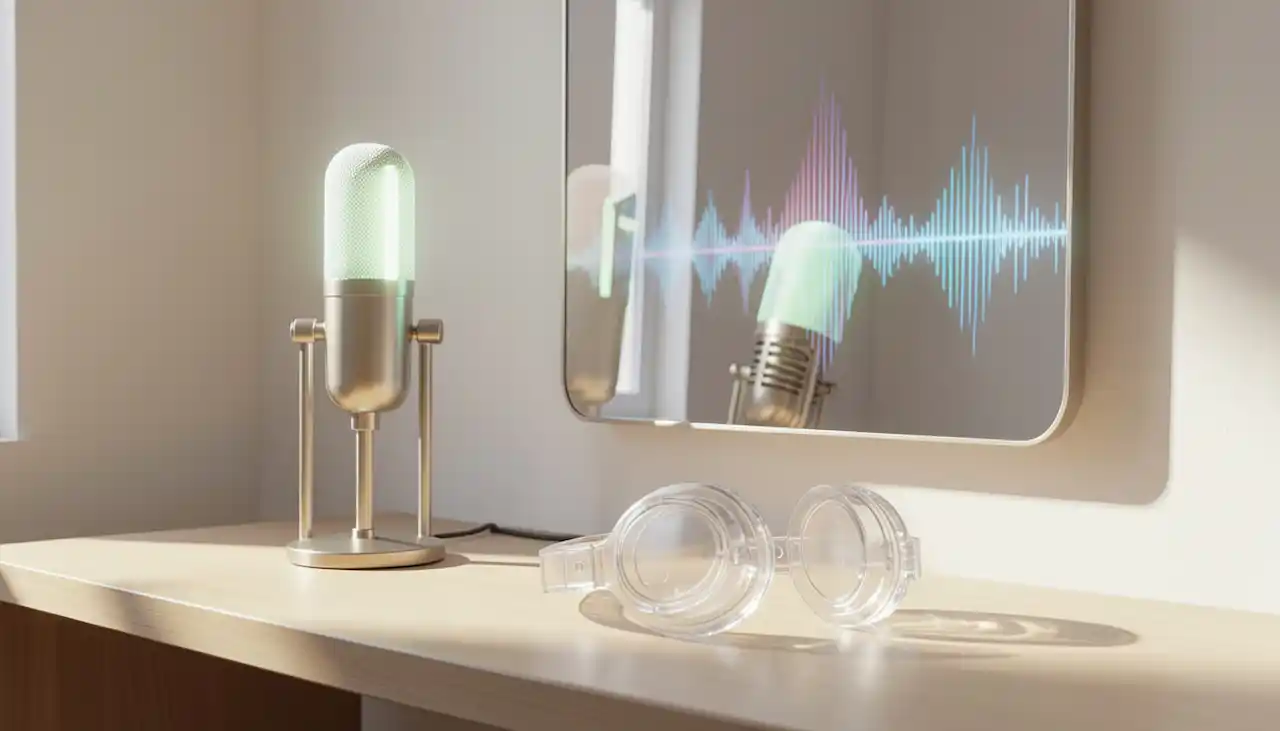
Practical Methods: Setting Up Your Own Language Lab
In the digital age, going abroad or attending expensive courses to bring a foreign language's pronunciation close to native levels is no longer a necessity. When the right methodologies are applied, home-based study can produce more efficient results than the world's best language schools. In this model, academically termed 'Autonomous Language Learning,' the individual is both the architect and the observer of their own progress. A successful home study is a combination of a disciplined auditory input process, physical mouth exercises, and technological feedback loops.
Shadowing Technique for Motor Memory Training
Accepted as the most effective academic method for pronunciation development, **Shadowing** involves listening to a speaker and repeating the same sounds, stresses, and speed immediately one second later (like a shadow). This action allows the brain to instantly transform 'auditory' data into a 'motor' action. During shadowing, one should focus on the rise and fall of sounds, pauses, and intonation rather than the meaning of words. Through this method, lingual muscles get used to the characteristic movements of the target language (for example, the distinction between 'r' and 'l' in English). A 15-minute shadowing session a day will visibly increase speaking fluency within 3 months.
Visual Feedback: Using Mirrors and Cameras
Pronunciation is a physical process as much as a mental one. For sounds to come out correctly, the tongue, teeth, and lips must take specific geometric positions. Articulating in front of a mirror or recording yourself on video while studying at home allows you to see your mistakes firsthand. Academic research shows that students who receive **visual feedback** correct their points of articulation much faster. Comparing your mouth movements with those of a native speaker allows you to detect articulation errors with millimetric precision.
Voice Recording and Comparative Analysis (Self-Evaluation)
Because humans hear their own voice through bone conduction, they cannot accurately gauge how they sound to others. The way to break this 'acoustic illusion' is to record your voice and then listen to it side-by-side with an original native recording. This **self-evaluation** process creates cognitive awareness and clears 'fossilized errors.' You should take notes with the precision of a sound engineer on where you pause and which stresses you miss. An individual who gets used to their own voice and analyzes their mistakes objectively overcomes speaking anxiety much faster.

Digital Phonetic Analysis and AI Support
Voice recognition systems and phonetic analysis software provided by modern technology act as 'private tutors' when practicing pronunciation at home. Digital tools that compare your voice's frequency and wavelength with original models can show which phoneme you are making a mistake on in percentage values. However, the critical part here is to use technology as a **validation tool**, not an end in itself. A study plan that combines AI feedback with articulation rules prevents incorrectly learned sounds from becoming permanent (petrification). Technology is the compass for phonetic perfection.
Immersion and Passive Listening
After a while, the brain begins to 'normalize' the sounds it is exposed to. Keeping English podcasts, news bulletins, or audiobooks playing in the background while working at home allows the brain to process phonetic structures at a subconscious level. This is called 'Passive Listening.' Even if you do not understand every word during this process, the rhythm, intonation, and speed of the language are processed into your brain as 'background patterns.' Supporting your active study sessions with this type of **digital ecosystem** makes the language learning process a natural part of life.
Minimal Pairs and Ear Sharpening Exercises
An ear that cannot distinguish between very similar sounds like 'Bad' and 'Bed' cannot produce the correct pronunciation. One of the best cognitive exercises to do at home is working with lists containing these 'minimal pairs.' Listening to sounds side-by-side and trying to detect the micro-differences increases the ear's phonetic resolution. Language learning is as much a sensory training as it is a muscular discipline. As you strengthen the connection between the eardrum and the brain, you can also correct the rough edges in your own speech like performing a 'tuning' exercise.
Conclusion: A Disciplined Phonetic Revolution
In conclusion, studying pronunciation at home is a triumph of will that must be crowned with patience and a methodological approach. From shadowing to mirror work, from voice analysis to IPA literacy, all these techniques are steps that will bring you toward the goal of becoming a global orator. Just 20 minutes of **deliberate practice** every day will, in the long term, bring native-level fluency and a respectable accent. Remember that perfect pronunciation is not a talent, but a correctly practiced muscle memory. Now, break the silence and meet your own voice with the world.
English Pronunciation: Master Your Accent & Phonetics — Experience This Now
Download our app to explore all these features and more.