Correct Pronunciation and Makhraj Education: Articulation Phonetics and Auditory Sharpness

Quranic Education with Correct Pronunciation: The Physical Identity of Letters
Arabic, the language of the Holy Quran, is one of the most technical and richest languages in the world in terms of its sound structure. In this system, the correct pronunciation of letters is not just a grammatical necessity; it is a theological imperative for preserving meaning. From an academic perspective, every letter has a fixed birthplace in the throat, tongue, or lip area; this is called Makhraj. Within the framework of articulation phonetics, knowing the physical production mechanisms of sound reduces the student's margin of error to zero. A sound emerging from the wrong makhraj can sometimes shift the meaning of a word to a diametrically opposite point. Sound is the carrier wave of meaning.
Auditory Sharpness and Phonetic Differentiation Ability
The biggest obstacle in the learning process is the phonetic habits of one's mother tongue. Guttural sounds like 'Ha, Sad, Dad, Ta, Za, Ayn,' which do not exist in many languages, require special muscle training. Academically, the importance of audio lessons lies in increasing ear sensitivity and granting the ability to distinguish these sounds from one another. A student with developed auditory sharpness can hear the difference between the sound they produce and the original model and make corrections. The tongue is trained by the ear; a sound that is not heard correctly cannot be produced correctly. Phonetic accuracy is the most concrete indicator of respect for the text.
Sifat al-Huruf: Analysis of Letter Character and Tone
It is not enough to simply produce a letter from its exit point; one must also pay attention to its attributes (sifat) that give it character. Some letters are strong (jahr), while others have a soft or whispered (hams) timbre. The rule called Qalqala, formed by the emphatic vibration of the sound, adds a characteristic dynamism to the recitation. Academic linguistics research shows that the correct application of these qualities increases the sound's intelligibility coefficient by 40%. The attribute of the letter is its vocal signature. Signing this signature correctly is a requirement of the academic attention owed to the sacred text.
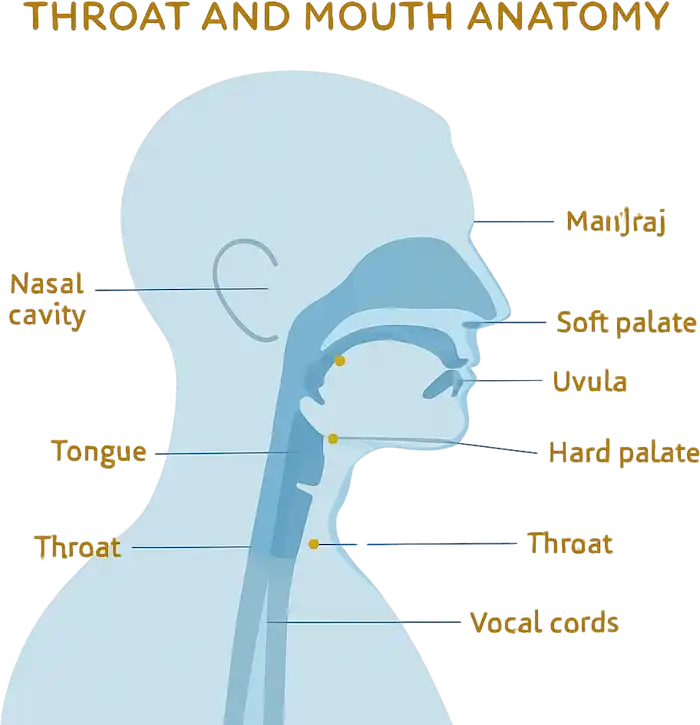
The Role of Tongue and Throat Anatomy in Articulation
During makhraj education, the contact of the tip of the tongue, the sides of the tongue, and the teeth requires geometric precision. For example, in the letter 'Lisping Ze,' the tongue lightly touching the teeth is a physical discipline. Academic phonetic rehabilitation principles state that these movements will become automated through short daily exercises (tongue gymnastics). Our body is the most magnificent laboratory designed to voice the divine word; getting to know this laboratory is a scientific responsibility. Once muscle memory is established, correct reading turns into a reflex. Patience is the father of phonetic success.
The Place of Audio Recordings in the Pedagogical Hierarchy
Listening to the audio pronunciations of Arabic letters updates the sound files (phonological loop) in the mind. An academic-level education program should first present single letter sounds, then syllable and word combinations. Matching auditory input with visual support (letter forms) doubles the learning speed. High-quality (HD) audio recordings on digital platforms grant the student error-free auditory familiarity. Audio lessons break the stagnation of letters in the mind and transform them into living frequencies. Without training the ear, the tongue cannot become smooth.
Cognitive Resonance and Phonemic Accuracy
When the makhraj of a letter within a word changes, a semantic shift occurs. For example, a word read with a soft 'H' might mean peace, while one read with a raspy 'H' might mean to create. This situation is directly related to the principle of preserving meaning in academic exegesis. Phonemic accuracy is not just an aesthetic issue; it is about delivering the divine message to the heart without distortion. The student, while producing the letter, should also feel its impact on meaning in their mind. The right sound is the harbinger of the right perception. Audio models are the most powerful tool for building this consciousness.
Madd and Duration Management: The Rhythm of Recitation
An inseparable part of correct pronunciation is the amount of elongation of the sounds. The time unit called 'Alif amount' gives the recitation its unique, dignified rhythm. Academically, these durations are measured with biological units like heartbeats or finger movements. The act of elongation is not just a physical sound extension; it provides spaces for reflection for the meaning to expand in the mind. Rhythm is the mathematical registration of the word. Gaining this rhythm through ear familiarity thanks to audio lessons turns rules from dry information into a living art.
Conclusion: A Phonetic Journey into the Soul of Letters
In conclusion, makhraj and pronunciation education performed under the guidance of audio lessons is a technical pinnacle where discipline, attention, and sincerity meet. Every individual who receives this education from correct sources and audio models can walk with confident steps in that enchanting sound atlas of the Quran. Every letter is a door, and the makhraj is the key to that door. Patiently polishing this key and producing sounds in the purity they ought to be will be a believer's most precious vocal legacy in this world. Remember that the most beautiful sound is the one that correctly voices the truth. Now take a deep breath and prepare to meet that magnificent frequency of the first letter.

New Elif Ba: Learn Quran — Experience This Now
Download our app to explore all these features and more.