Organic Chemistry is No Longer Hard: Academic Analysis and Memory Techniques

The Heart of AYT: Introduction to Organic Chemistry and Basic Philosophy
Organic Chemistry is the most voluminous and, at first glance, the most complex-looking section that science students encounter in the AYT marathon. This massive universe, shaped around the carbon atom's ability to make four bonds, actually has an extremely orderly and logical system within itself. The reason many students feel crushed under the 'memorization burden' is that they have not fully grasped carbon's hybridization capability and molecular geometry. The first step to success is establishing the link between sp, sp2, and sp3 hybridizations with VSEPR rules and being able to imagine the three-dimensional arrangement of molecules in space. Organic chemistry is not a memorization course, but a 'molecular architecture' discipline.
Functional Groups: Ciphers of Chemical Character
The alphabet of organic chemistry is functional groups. Alcohols, ethers, aldehydes, ketones, carboxylic acids, and esters; each gives the molecule a unique personality. Seeing these groups not just as formulas but as the 'reactive active center' of the molecule increases the learning speed. Studying the transformations of these groups into each other (oxidation and reduction steps) as a flow chart via academic notes allows you to connect hundreds of reactions to a single logic chain. Knowing that an alcohol turns into an aldehyde when oxidized, and an aldehyde turns into an acid, is to see the big picture of organic chemistry.
IUPAC Naming Rules: Universal Language of Chemistry
Being able to name an organic compound is like reading its ID card. IUPAC (International Union of Pure and Applied Chemistry) rules ensure that chemists all over the world name the same molecule in the same way. Basic algorithms such as choosing the longest carbon chain, giving the smallest number to side groups, and considering alphabetical priority must be adopted like rules of a game. To avoid mistakes in naming questions, 'training' on many complex compounds ensures that the mind turns these rules into reflexes. Naming is the most technical way of understanding the molecule's structure.
The Concept of Isomerism: Same Atoms, Different Worlds
The state of having the same molecular formula but different structural formulas or spatial arrangements, isomerism, is one of the most 'selective' topics of organic chemistry. Distinguishing between structural isomerism (chain-branching, position, functional group) and stereoisomerism (geometric isomerism: cis-trans) requires a high level of spatial intelligence. When solving 'Which are isomers of each other?' questions encountered in the exam, trying to imaginarily overlap molecules or checking the bonding order of atoms is the most effective method. Isomerism is the aesthetic and diversity dimension of chemistry.
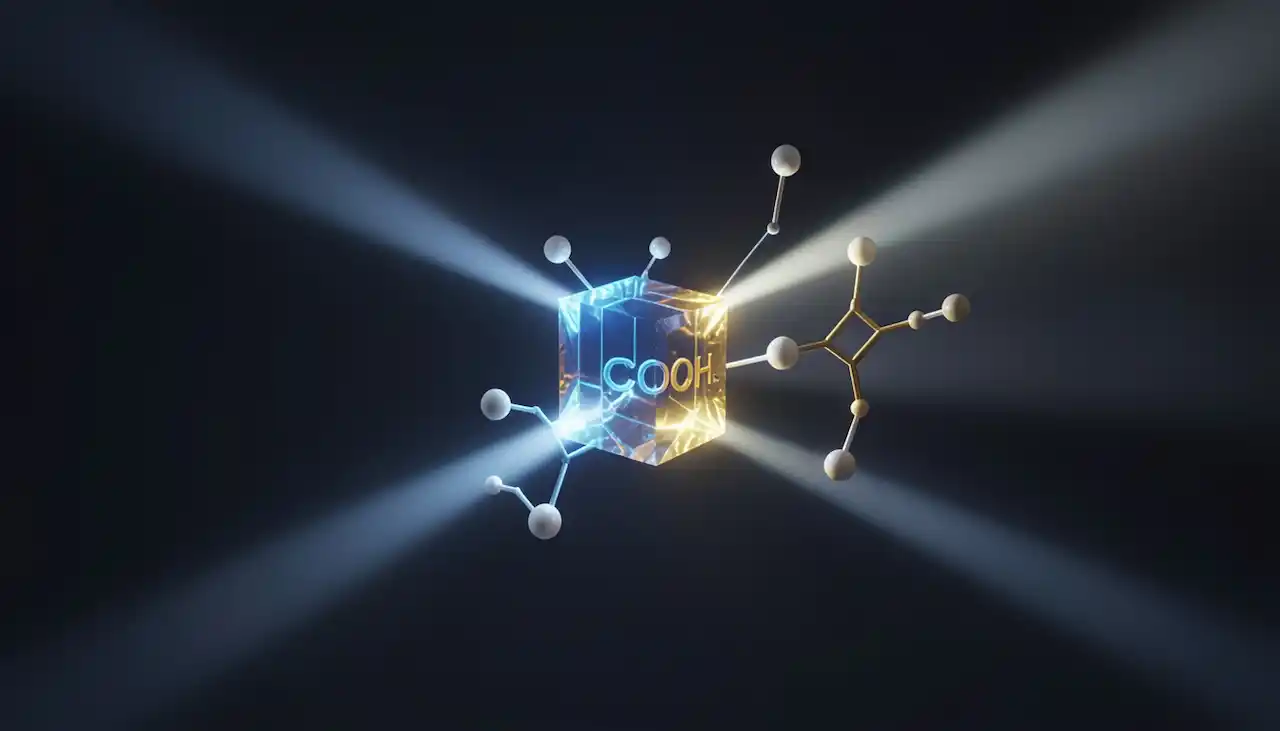
The World of Hydrocarbons: Alkanes, Alkenes, Alkynes
Hydrocarbons, which form the basic skeleton of organic chemistry, are examined in two main branches: saturated (alkanes) and unsaturated (alkenes, alkynes). The difference between the paraffinic (inert) structure of alkanes and the addition reactions (such as Markovnikov's rule) resulting from the pi bonds of alkenes and alkynes is the focus of exam questions. That resonance structure of aromatic compounds (arenes), including benzene and its derivatives, explains why they are so stable. While studying hydrocarbons, learning the industrial usage areas and fuel values of each group also supports theoretical knowledge with general culture.
Cognitive Coding and Memorization with Mind Maps
To keep complex organic reactions in mind, visual coding techniques are priceless. Matching each functional group with a specific color or symbol (for example, representing carboxylic acids in red and alcohols in blue) triggers visual memory. By preparing a 'reaction map,' placing an alcohol molecule in the center of the paper and drawing arrows coming out of it to show which compounds it transforms into through which processes turns information into a structured network. The mind remembers such network structures (schema) much more easily than random data. Creating your own ciphers personalizes the learning process.
Analytical Question Solving and Mechanism Analysis
In the AYT chemistry test, organic questions are generally built on molecular structures, acidity-basicity comparisons, or finding reaction products. Considering electron densities (inductive and mesomeric effects) while solving questions allows you to find a scientific answer to the question 'why did this product form?'. Pondering over reaction mechanisms, although it seems difficult at first, saves you from the burden of memorizing thousands of reactions in later stages. Returning to the 'origin logic' of the relevant topic after every incorrectly solved question is the most effective way of improvement.
Conclusion: Reading the Molecular Poetry of Organic Chemistry
In conclusion, Organic Chemistry is life itself; it is everywhere from our DNA to the food we eat, from the medicines we use to the clothes we wear. When you see this course not as an exam obstacle but as a guide telling the language of nature, success will come naturally. With the right methodology, regular repetition, and conceptual depth, getting a full score in this field is not a dream. Trust yourself, imagine the molecules, and start solving the secrets of this magnificent carbon universe one by one. Your success in organic chemistry will be the most concrete evidence of your analytical thinking power in your academic career.
TYT AYT Chemistry: Topics & Formulas — Experience This Now
Download our app to explore all these features and more.