Baby Development in the Womb: Auditory Stimulation and Neural Network Construction
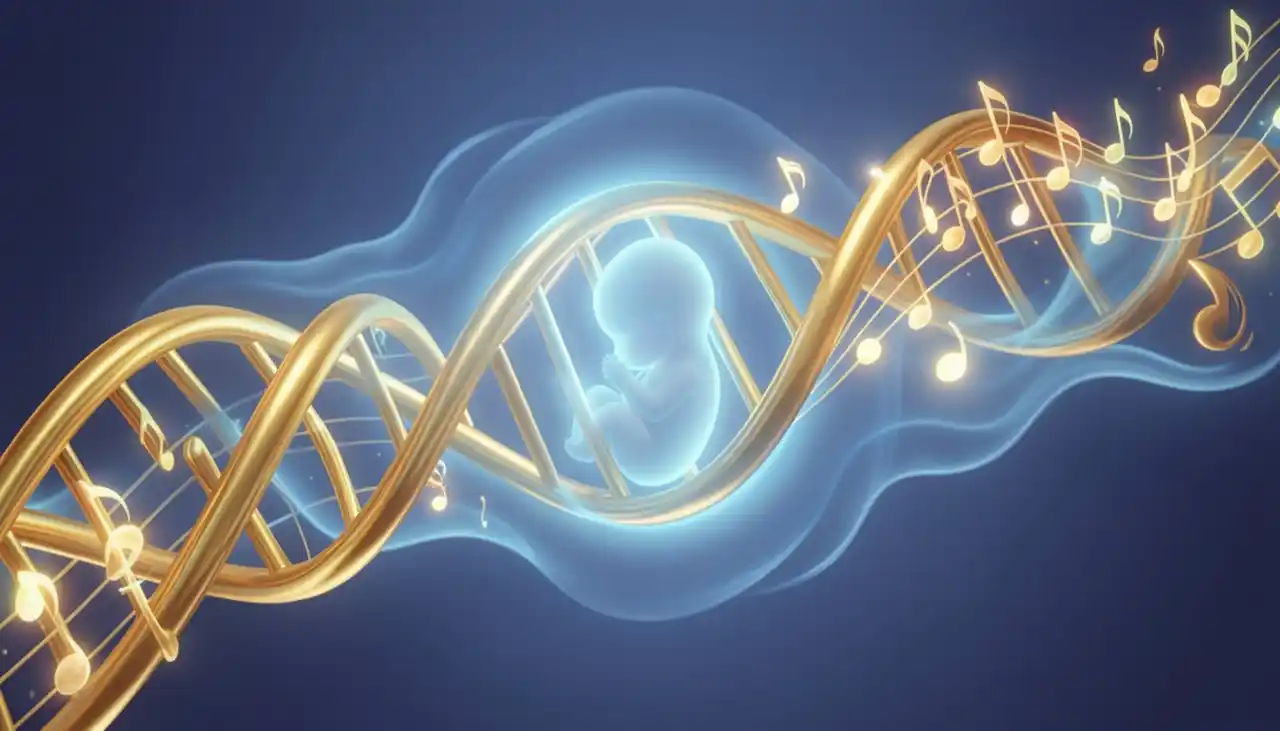
The First Bond with the Baby: Fetal Perception of Revelation and Sound
Contrary to popular belief, the process of babies perceiving the outside world does not start with birth, but with the sense of hearing that becomes active in the womb from the 24th week onwards. The fetal ear structures and auditory centers in the brain begin to record external sounds, as well as the mother's heartbeat and voice. From an academic perspective, music played during pregnancy provides 'auditory stimulation,' triggering the establishment of billions of new synaptic connections in the fetal brain. Music functions as 'neural training,' shaping the child's future capacity for language learning, mathematical intelligence, and emotional perception. This radiant bond is the first and strongest communication step a human takes into life.
Fetal Neurobiology: The Effect of Sound Waves on Brain Development
Sound waves are mechanical vibrations transmitted to the fetus through the amniotic fluid in the womb. These vibrations stimulate the fetal hearing cells (hair cells), transforming into electrical signals that reach the temporal lobe in the brain. Academic research indicates that fetuses exposed to regular and harmonic sounds exhibit a more organized process of 'brain gyrification' (folding). The mathematical order inherent in music (rhythm, tempo, harmony) serves as an 'architectural plan' for the developing mind. The brain records every rhythm it hears as a pattern. Rhythm is the earliest phonetic foundation of intelligence.
The Mother's Voice and Lullabies: The Phonetic Basis of Secure Attachment
The most important and safest sound in the world for a fetus is the mother's voice. The oxytocin hormone secreted in moments when the mother speaks, sings, or hums a lullaby conveys the message 'you are here and you are safe' to the baby. Academic 'Attachment Theory' emphasizes that these prenatal interactions strengthen postpartum mother-baby harmony by 40%. The baby etches the timbre and melody of the mother's voice into its mind. Upon hearing the same sounds or lullabies after birth, the infant experiences an 'acoustic return' to that peaceful environment within the womb and calms down rapidly. Sound is the most ancient carrier of tenderness.
Language Development and the Beginning of Phonological Awareness
Long before babies learn to speak, they learn the 'prosody' (rhythm and intonation) of the languages and music they hear. Academic linguistic studies prove that babies exposed to stimuli in different languages or musical forms while in the womb possess higher phonetic awareness (the ability to distinguish sounds). The syllables, emphases, and pauses found in music prepare the brain's language centers for reading and speaking processes in advance. The melodic structure of a verse or a lullaby delivers the 'aesthetic' of the words to the baby before their meaning. Language is sealed in the mind on the wings of music.

Mathematical Intelligence and Rhythmic Patterns
Music and mathematics share the same structural skeleton; both are built on numbers, proportions, and sequential series. The regular beats (beats per minute) the fetus is exposed to in the womb sow the seeds of 'categorization' and 'pattern recognition' abilities in the mind. While the 'Mozart Effect' is academically debated, data exists suggesting that complex classical music structures stimulate spatial-temporal intelligence. A mind nourished by rhythmic order becomes more inclined to decipher the order in the universe. Music is the mind's most natural toy and first teacher.
Fetal Stress Management and the Acoustic Shield
Sudden and startling external sounds (explosions, loud horns, shouting) can cause a 'startle reflex' and a sudden increase in heart rate in the fetus. Continuous and soft-toned music acts as an 'acoustic shield' that masks these chaotic sounds. Academic pediatric guides suggest avoiding loud environments during pregnancy and preferring peaceful timbres to maintain fetal tranquility. When the baby's nervous system is protected by the order of music, their postpartum 'temperament' traits tend to be more balanced and harmonious. Peace begins in the womb as a habit.
Spiritual Heritage: The Impact of Sacred Texts and Prayers
In many cultures, it is a tradition to play sacred texts, prayers, and dignified melodies to the baby in the womb. This act is the first spiritual seed sown into the baby's soul. Academically, this is described as the 'earliest stage of cultural transmission.' The spiritual energy and sincerity within the sound leave deep traces in the fetal limbic system (emotional center). Children raised with these sounds develop a greater familiarity and love for these spiritual concepts in the future. Faith is quietly whispered into the baby's DNA through the radiant frequency of sound. Every note serves as a form of spiritual sustenance.
Conclusion: A Life Germinating in the Light of Music
In conclusion, music and sound stimulation in the womb is the most strategic and emotional investment in a baby's development. Every sound session that combines the right frequencies, the right timbres, and sincere tenderness is a building block for your baby's future character and intelligence. It is vital for parents to manage this process with patience, scientific data, and love for the sake of raising healthy generations. It should not be forgotten that your baby does not just hear you; they feel along with you. Now, instead of placing headphones on your belly, let the music echo throughout the house and meet your baby in these radiant melodies.

Pregnancy Music: Calm & Sleep — Experience This Now
Download our app to explore all these features and more.