Correctly Understanding the Quran Translation: Bringing Verses to Life and Reflection Methods
From Word to Meaning: Grasping the Message of the Quran
While reading the Holy Quran from its original Arabic is a great reward and a spiritual treasure, Almighty Allah revealed this book for us to 'think and take heed.' As stated in Surah Al-Furqan, verse 32, the revelation of the Quran in stages is to facilitate its settling into hearts and its understanding. It should not be merely an act of reading, but the opening of a reflection (tafakkur) gate where you can enter the world of meaning of the verses—this should be one of the believer's most fundamental mental exercises. Knowledge of meaning is the soul of recitation and the compass of worship.
Comparative Reading and Conceptual Depth
Platforms that present the Arabic text and its translation fluently on the same screen improve your vocabulary through the comparative reading method. This method helps you feel the context in which the verse was revealed and the conceptual framework it sits upon. The most important point to consider when reading a translation (meal) is the fact that the translation is not the Quran itself, but a version of what a human has understood from that verse. Therefore, while focusing on texts compiled from reliable sources, one should approach them with a pure intention, far from discussions that would cloud the mind. Semantic analysis is the effort to sense the divine will behind the words.
Projecting Verses Onto Life
When you read a verse, asking what that verse says to your life today is the beginning of true reflection. For example, looking at verses about justice when faced with a social injustice makes the digital mushaf a life guide. Penetrating the meaning of the verses rather than just staying with their literal wording will also increase the quality of recitation during prayer. A recitation performed while knowing what is being said awakens much deeper echoes in the heart and saves worship from mechanicalness. Life guidance is the result of the Quran's address, which remains fresh in every age.
Topic-Based Reading and Using the Index
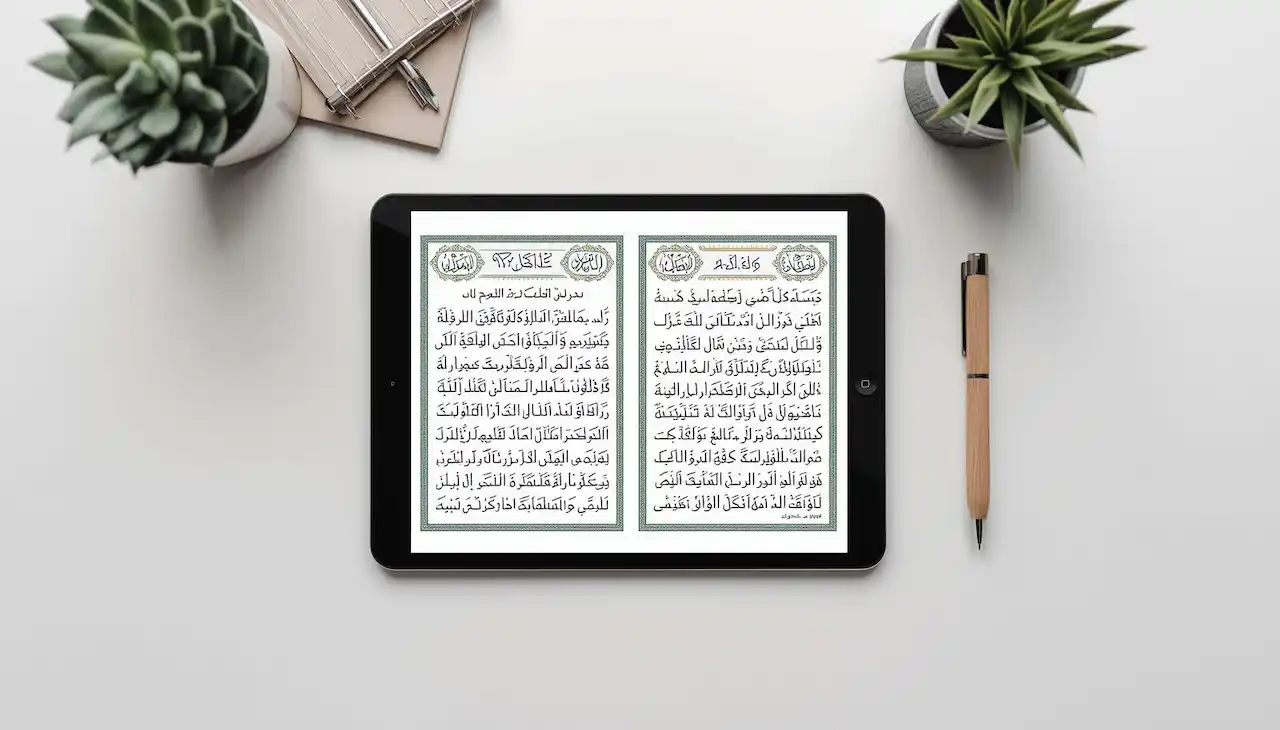
Many Muslims have made it a worship routine to finish the Quran from beginning to end (khatm). Although the speed of digital platforms and the fluency of page transitions make this process efficient, a purely linear reading is not enough. A 'topic-based' approach is also essential for reflection. By using the relevant indexes, it is possible to quickly reach sections where topics such as morality, worship, or parables are discussed. This systematic approach allows us to build a consistent Islamic worldview in our minds. Systematic reflection is the shortest way to transform knowledge into wisdom (irfan).
From Translation to the Original: Building a Bridge
For a believer who does not recognize Arabic letters, reading the translation serves as a vital bridge to avoid being deprived of Allah's word. However, you should not just stay on this bridge; you must convert the enthusiasm brought by the translation into learning the original language. Listening to the rhythm of the verses aloud while reading the translation will open the heart to the meaning while habituating the ear to Arabic sounds. As knowledge increases, so will the admiration for the literary miracle of the Quran, taking the bond between the servant and their Lord to a more unshakeable point. Language consciousness is the key to grasping the aesthetics of revelation.
Conclusion: The Journey of Light Passes Through Meaning
In conclusion, the effort to correctly understand the Quran translation is not just an intellectual curiosity, but a consciousness of servitude. Bringing verses into life and seeking what the Quran says in every event is the essence of the true wisdom (irfan) journey. The rapid access and comparison possibilities offered by modern technology are our strongest allies serving this noble goal. A translation reading performed with correct methods is the first step of a sacred journey extending from the majesty of the wording to the depth of the meaning. The Quran defines itself as 'light,' and the path of this light passes through the meaning.
Quran and Its Translation (Fast & Simple) — Experience This Now
Download our app to explore all these features and more.