In What Order Should Prayer Surahs Be Memorized? The Hifz Hierarchy

The Right Memorization Roadmap: A Mental and Spiritual Building Process
Salah, the cornerstone of Islamic practice, requires the error-free recitation of specific surahs and supplications. For a believer just starting out or an individual wishing to refresh their knowledge, the most critical question is where to begin. Academically, the memorization hierarchy usually starts from the section in the final juz of the Holy Quran known as the 'short surahs.' This choice isn't accidental; the rhythmic structure and brief verses of these chapters facilitate mental coding, keeping motivation high. The process of memorization is not a random collection of data, but a methodological construction of character.
Surah Al-Fatiha: Laying the Foundation Stone
The first stop is undoubtedly Surah Al-Fatiha, the heart of the Quran and an indispensable part of every rakat of prayer. Since Al-Fatiha serves as both a prayer and an introduction, it forms the basis of the entire system of worship. Once Al-Fatiha is fully mastered, one should move on to the sequence commonly known as the 'Prayer Surahs.' At this stage, paying close attention to the articulation points (makharij) of the letters ensures that the surah is not just memorized, but recited correctly. Al-Fatiha is the most concrete expression of the covenant between the believer and their Lord, which is why it sits at the top of the hierarchy.
Observing the Mushaf Order: From Surah Al-Fil to Surah An-Nas
Following Al-Fatiha, one should follow the sequence starting from Surah Al-Fil and moving downward (Quraysh, Ma'un, Kawthar, Kafirun, Nasr, Tabbat, Ikhlas, Falaq, An-Nas). This order offers both pedagogical ease and instills the discipline of respecting the original arrangement of the Quranic Mushaf. Each of these short surahs sheds light on a different facet of Islamic history and theology. Following the Mushaf order creates a chronological and logical integrity in the mind. This discipline prepares a solid ground for longer memorization tasks (such as Juz memorization) in the future.
Synchronized Memorization of Prayer Supplications
In the memorization process, not just surahs, but also the foundational supplications recited during the various postures of prayer (Subhanaka, Ettehiyyatu, Salli-Barik, Rabbana, and Kunut prayers) should be included in the plan. While the surahs fill the recitation (qiyam) portion, supplications are the spiritual nourishment for the moments of bowing (ruku), prostration (sajdah), and sitting. To prevent confusion between prayers and surahs, the part-to-whole technique should be applied. While supplications form the technical skeleton of the prayer, surahs are like radiant garments draped over that skeleton. Learning both groups in balance grants full proficiency in performing the prayer.
Auditory Guidance and Articulation Aesthetics
One should not move to the next verse until the current one is pronounced perfectly, allowing the tongue to habituate to the articulation points. At this stage, working with an auditory guide is the most effective way to avoid deeply ingrained mispronunciations (galat-ı meshur). Listening to the voice recordings of professional qaris helps in grasping not only the words but their soul and emphasis (tajwid). Phonetic familiarity increases the speed at which the mind recalls words. The sense of hearing is the most powerful gateway to permanent memory.
Spaced Repetition and Practical Application
Another method that accelerates the process is spaced repetition. Listening to verses not just at a desk but while walking or resting activates a 'passive learning' mode in the background of the brain. Academic experience shows that reciting a newly memorized surah immediately in that day's prayers facilitates the transition of information from short-term memory to long-term memory. This method, which we call 'applied reinforcement,' makes forgetting the surah nearly impossible. Salah is a divine laboratory where every newly learned piece of information is sealed.
Visual Memory and Digital Font Clarity
The auditory process supported by visual tracking strengthens the bond between neurons. Digital resources where you can clearly see the vowel mark (harakah) details minimize the risk of errors in visual memory. Specifically, reading through 'vector fonts' etches the anatomy of the letters into the mind. Blurred or low-quality prints can cause the mind to code incorrectly. Therefore, a study environment where the eye does not tire and letters can be distinguished in all their detail increases memorization speed by 30%.
Conclusion: Memorizing with Integrity of Meaning and Wording
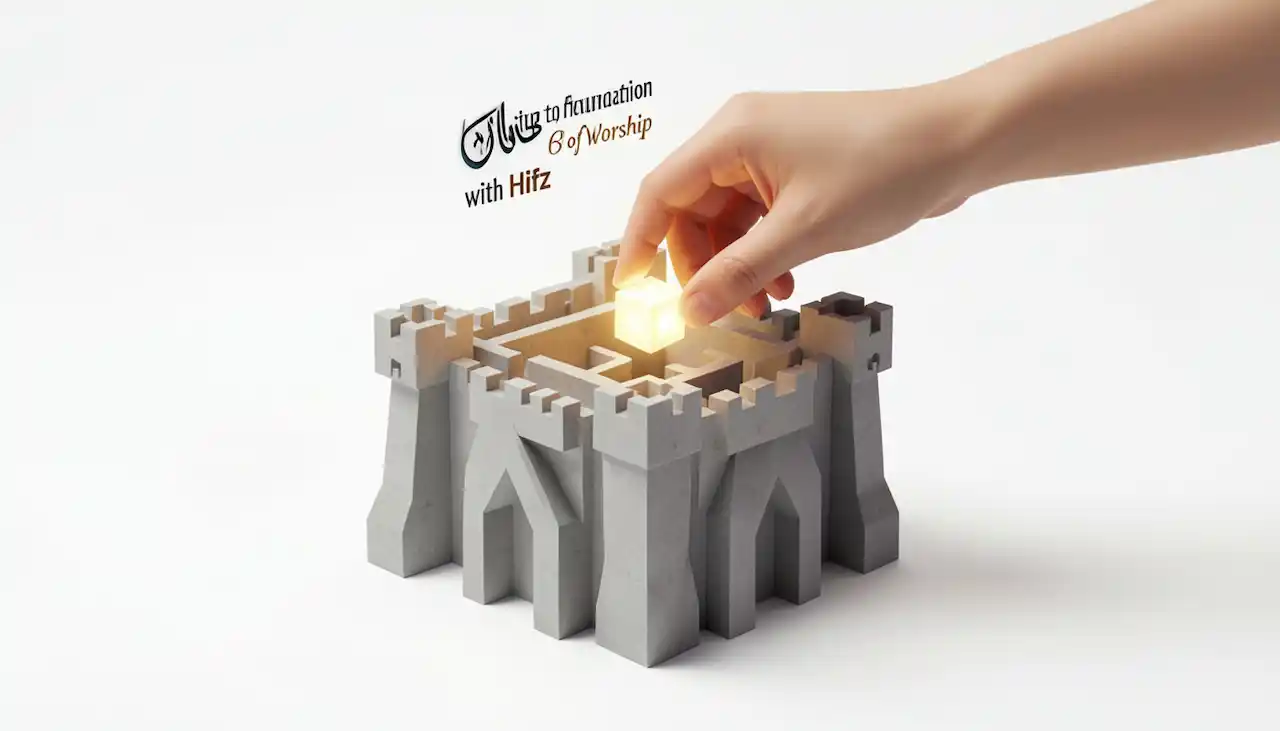
In conclusion, a correct memorization roadmap is possible through patience, discipline, and high-quality resources. Tracking text through digital platforms where letter clarity is preserved is the key to this journey. While equipping your spiritual world with these surahs, focusing on the aesthetics of pronunciation and depth of meaning at every step will transform worship from a mere ritual into a state of spirit and consciousness. Every new word memorized is a brick added to the believer's spiritual fortress. When this building process is complete, the person praying becomes not just a reciter, but a heart that integrates with what it reads.

Short Surahs & Prayer Supplications (Audio) — Experience This Now
Download our app to explore all these features and more.