The Academic Impact of Fairy Tales on Children's Imagination and Language Development
Mental Development: The Cognitive Map of Fairy Tales
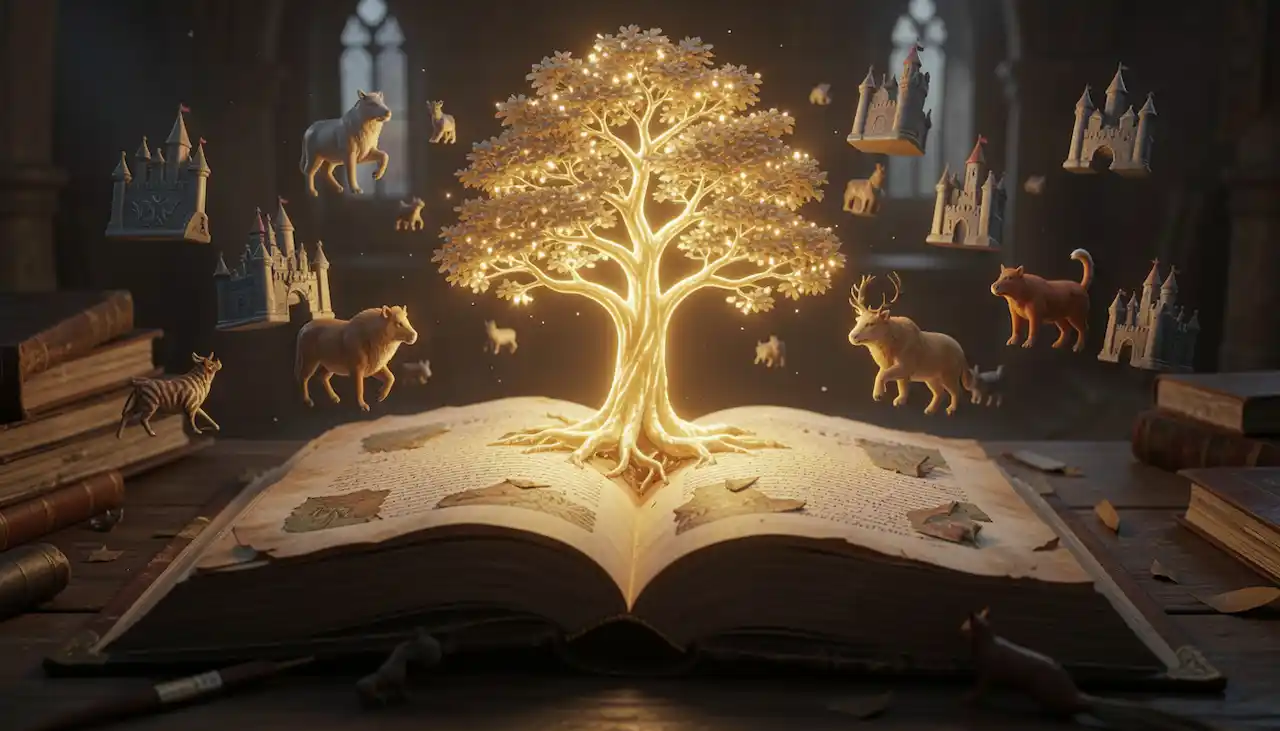
Fairy tales are among the most ancient and effective educational tools, allowing children to explore a world they have yet to experience. While a child listens to or watches a tale, the frontal lobe (reasoning and decision-making) and temporal lobe (language and memory) regions of their brain become active simultaneously. From an academic perspective, storytelling is a mental training ground that develops a child's 'abstract thinking' ability. A universe with dragons, fairies, or talking animals allows the child to stretch the boundaries of real life and test problem-solving skills in the laboratory of 'imagination.'
The Critical Role in Language Development and Vocabulary Wealth
Fairy tales possess a vocabulary that reaches far beyond everyday conversational language. Descriptions, metaphors, and rarely used adjectives become part of the child's linguistic atlas through these stories. Scientific research has proven that children who regularly listen to tales have a 30% richer vocabulary and a better ability to construct proper sentences compared to their peers. A child introduced to the aesthetic use of language develops a much more confident and error-free rhetoric when expressing their own feelings and thoughts. A tale presents the mathematical structure of language to the child with aesthetic grace.
Empathy and Emotional Intelligence: Walking in Someone Else's Shoes
The challenges, fears, joys, and triumphs experienced by fairy tale heroes grant the child the skill of 'perspective-taking.' This marks the development of empathy, the most fundamental component of emotional intelligence (EQ). In a tale where good triumphs over evil, the child internalizes moral values (justice, honesty, helpfulness) not as a didactic lesson, but as an emotional experience. Symbolic narratives in tales function as a type of 'bibliotherapy,' enabling the child to face their subconscious fears and resolve them in a safe environment.
Creative Thinking and Innovative Intelligence
The 'out of the box' thinking skill, most emphasized in modern education systems, flourishes in the world of limitless possibilities offered by fairy tales. Fantastic elements in stories allow the child to build logical bridges between seemingly impossible situations. A character solving a problem with a magical object or a clever trick triggers the reflex in the child's mind to seek innovative solutions. Creativity is the art of combining existing information in new and unusual ways, and fairy tales are the richest warehouse of materials for this art. A child with a developed imagination becomes the problem-solving individual of the future.

The Digital Pedagogy of Visual and Auditory Tales
Today, tales reach children not only through books but also via animations and audio theaters on digital platforms. Digital storytelling, when designed correctly, activates a child's multisensory learning capacity. Emphases in tone of voice, character facial expressions, and background music that supports the plot increase the story's memorability. However, the key here is for the visuals to be minimal and artistic enough not to stifle the child's own imagination. High-quality tale content combines technology and tradition in a balance suitable for the child's cognitive level.
Attention Span and Focus Training
Unlike quickly consumed digital content, structured tales consisting of an introduction, development, and conclusion instill the discipline of 'waiting patiently' and 'following along' in children. A child curious about the end of a story learns to focus their attention on a single subject for a long time. This deep concentration skill is the most fundamental preparation for academic success in school life. Following cause-and-effect relationships in the plot strengthens the analytical region of the brain, minimizing the risk of distraction. Listening to a tale is a mental meditation.
Cultural Heritage and Identity Construction
Tales are invisible bridges that carry the thousands of years of experience, values, and life philosophy of the society they belong to into future generations. From the practical wit of local heroes to the universal lessons of Andersen's Fairy Tales, every story helps the child gain a cultural identity. Through these works, the child feels part of the human family, not just their own. A balanced presentation of national and universal tales ensures the child grows as an individual both connected to their roots and possessing a global citizen's vision.
Conclusion: A Generation Growing in the Light of Tales
In conclusion, fairy tales are miraculous tools for which there is no substitute in child development. Telling a tale to a child is opening thousands of windows in their mind and planting seeds of love in their heart. Thanks to fairy tales, a generation is raised that uses language beautifully, is not afraid to dream, and does not falter in the face of difficulties. It is vital for parents and educators to make stories a natural part of life and to connect children with high-quality content blended with technology. Remember, imagination is more valuable than knowledge; for while knowledge is limited, imagination embraces the entire world and the future. Now is the time to crack open the door to the magical world of fairy tales.

Lullaby and Tale World: Baby Sleep & Development Guide — Experience This Now
Download our app to explore all these features and more.