Illustrated Prayer Guide: The Aesthetics of Posture and Khushu
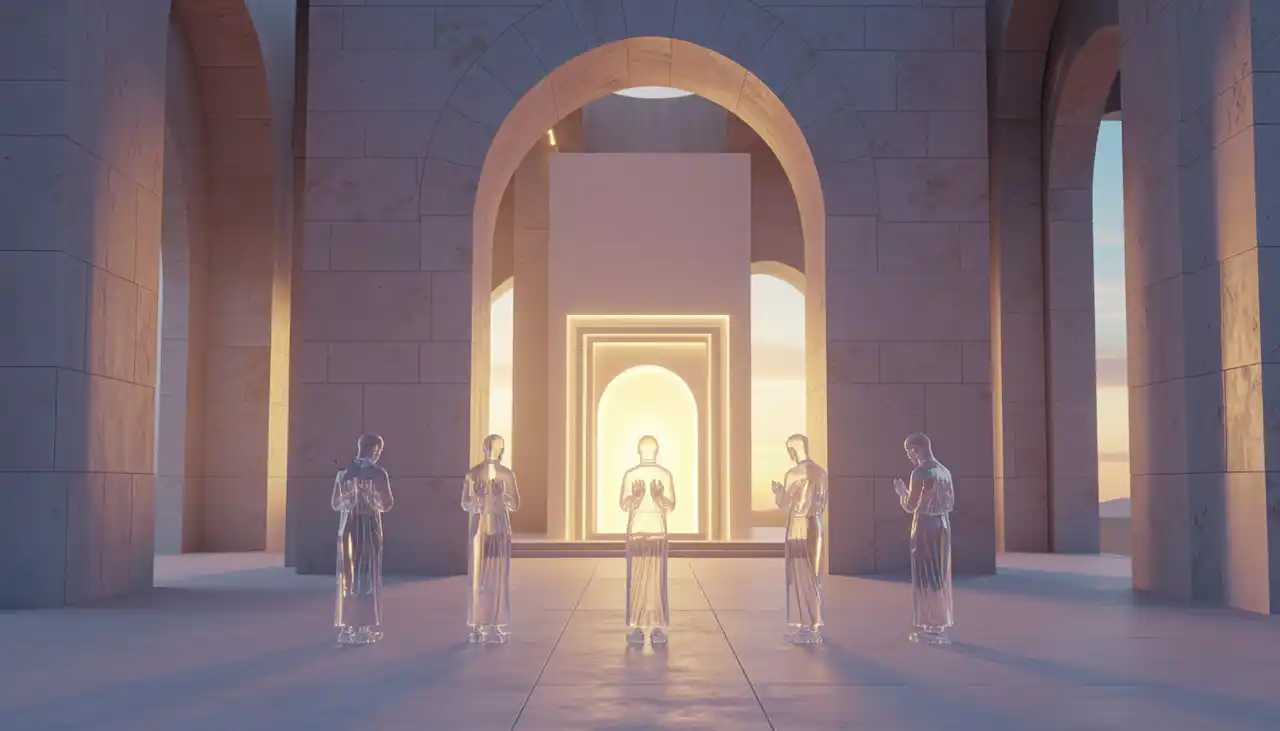
Visual Education: The Ontological and Physical Structure of Salah
Salah (prayer) is considered the pillar of Islam and the 'Miraj' (ascension) of the believer—a fundamental act of worship requiring both physical and spiritual integrity. From an academic perspective, Salah is the convergence of specific 'rukn' (pillars/movements) and 'qira'at' (recitations) within a mathematical order. Correct performance is not merely formal compliance but a process of spiritual discipline. Each stage of Salah symbolizes the individual's position before their Creator. Learning through a visual guide ensures that this complex and profound process is internalized without error. In this article, we examine the physical pillars of Salah and the deep meanings they carry in an academic tone.
Sincerity in Niyyah and the Iftitah Takbir: Bidding Farewell to the World
Niyyah (intention), the beginning of Salah, is the heart's certification of 'for whom' the act is performed. Immediately following is the Iftitah Takbir; raising the hands to ear level is a symbolic gesture of 'throwing worldly affairs behind.' In academic fiqh literature, this Takbir is the gateway to prayer; from this moment, the believer is considered accepted into the divine presence, cutting ties with the external world. This beginning allows the individual to gather their mental focus on a single point (Tawhid). The Takbir is the soul's cry for liberation and the first verbal declaration of absolute submission. At this stage, the foundations of khushu are laid.
Qiyam and Qira'at: Standing with the Divine Word
Qiyam means standing in prayer and represents the existential uprightness of man. During this phase, where hands are bound, reciting verses from the Holy Quran (Qira'at) is a direct dialogue between the servant and their Lord. In academic exegeses, Qiyam is characterized as a physical expression of 'rectitude and direction.' This process of the Word, beginning with Surah Al-Fatiha, reminds man of his place in the universe, his responsibilities, and his need for divine mercy. The act of standing also serves as a rehearsal for the standing on the Day of Judgment. Words flow into the heart during Qiyam as sustenance for the soul.
Ruku: The Depiction of Humility and Frailty
Bowing from Qiyam into Ruku is the most aesthetic form of breaking one's pride and bowing before Allah, the possessor of infinite majesty. The dhikr 'Subhana rabbiya'l-azim' recited during Ruku is an admission of the Creator's greatness and the servant's own limitations (frailty). In academic fiqh studies, Ruku is defined as the station of 'dignity' and 'respect.' This position is a breaking point where the mind sheds the 'I' feeling and focuses on 'He.' Ruku is the bridge from vertical posture to horizontal humility.

Sajdah: The Metaphysical Peak of Proximity
Sajdah (prostration) is the most crucial moment where the servant is closest to their Lord. Placing the forehead on the ground signifies absolute humility by lowering man's most honorable organ. Academic research shows that brain waves during Sajdah (especially in the frontal lobe) shift to a frequency of deep tranquility and submission. The cry 'Subhana rabbiya'l-a'la,' repeated thrice, validates the transcendence of the Most High. Sajdah is the peak of the transition from an ego-centered life to a divinely-centered one. The sitting between two prostrations (Jalsa) is a moment of pause where this high energy is processed by the mind.
Qa'da al-Akhira: Awakening with Tahiyyat and Salam
The final sitting at the end of Salah (Qa'da al-Akhira) is the section where the fruits of worship are gathered and the Tahiyyat prayer, a 'gift of the Miraj,' is recited. Sending peace to the Prophet (PBUH) and all righteous servants at this stage shows that Salah is not just an individual act but a project for social peace. Exiting the prayer with 'Salam' is the act of carrying the serenity and morality acquired in the divine presence into the 'outer world' (life). Academically, Salam is not an end but a contract to restart life with a renewed spirit. Salah becomes socialized through Salam.
Etiquette and Ta'dil al-Arkan in the Pillars of Salah
For Salah to be valid and perfected, 'Ta'dil al-Arkan' (performing the pillars properly without haste) is mandatory. The moments of stillness between movements (tumaninah) are the spiritual breathing points of the prayer. Academic discipline emphasizes that these pauses and mindfulness are what distinguish Salah from a gymnastic exercise. Rules of etiquette, such as how long to perform a movement and where the eyes should focus, prevent distraction and bring the worship into an aesthetic discipline. Patience is a hidden rule woven into the physical fabric of Salah.
Conclusion: Tuning Life through Salah
In conclusion, Salah is the most powerful mechanism that tunes a believer's life to a divine order. Learning the pillars correctly through an illustrated guide means starting this sacred journey on solid ground. Salah is not an action confined to a mosque or a prayer mat; it is a luminous energy that awakens the individual five times a day, restrains them from evil, and grants them an ontological identity. Every correctly performed prayer is a lantern illuminating the dark rooms of the soul. Now, take your intention and rediscover yourself within the pillars of this unique union. Remember, the person who prays is the person who sanctifies time.

Prayer Guide Illustrated Pro: Step-by-Step Worship — Experience This Now
Download our app to explore all these features and more.