Etiquette of Praying in Islam and Conditions for Acceptance: Spiritual Protocol

How to Pray Correctly? The Aesthetic and Theological Dimension of Asking
Dua is not just a simple wish list; it is the servant's ontological stance in the presence of their Creator and the most elegant confession of their helplessness. Just as everything in the atlas of Islamic thought has a method and an etiquette, so too does praying have spiritual protocols that increase the chance of acceptance. Etiquette (Adab) transforms prayer from a dry word into an energy that pushes against heavenly gates. The verse 'Say, what would my Lord care for you if not for your prayer?' (Al-Furqan, 77) clearly demonstrates the central position of prayer in human existence. A successful supplication begins with a correct methodology.
Sincerity and Presence of Heart: The Primary Condition for Acceptance
The first and most vital etiquette of praying is ikhlas (sincerity) and presence of heart. An orientation where the heart wanders in other worldly valleys while the tongue repeats memorized automatic sentences will struggle to reach its target. A true prayer occurs in a 'moment' when the mind is purified of all chaotic noise and the soul is completely focused on its Lord. Ikhlas means that no shirk, showing off, or doubt leaks into the prayer. The hesitation of 'I wonder if it will be accepted?' while asking from Allah kills the soul of the prayer. Supplications made with complete certainty and a firm belief are the ones closest to acceptance.
Physical Preparation: Wudu, Qibla, and Solemnity
Prayer is a session of 'audience in the Presence.' Therefore, wrapping oneself in physical cleanliness by taking wudu before prayer and exhibiting a bodily discipline by turning toward the Qibla is part of the etiquette of prayer. Raising the hands to the heavens (Raf' al-yadayn) is not just a form, but the symbolic language of saying: 'O Lord, my hands are empty, but they have opened to Your infinite mercy.' This physical stance helps the individual psychologically enter the climate of prayer and feel themselves in the divine presence. A majestic and dignified posture reflects the seriousness of the prayer.
The Spirit of Time: Moments When the Doors of Mercy Open
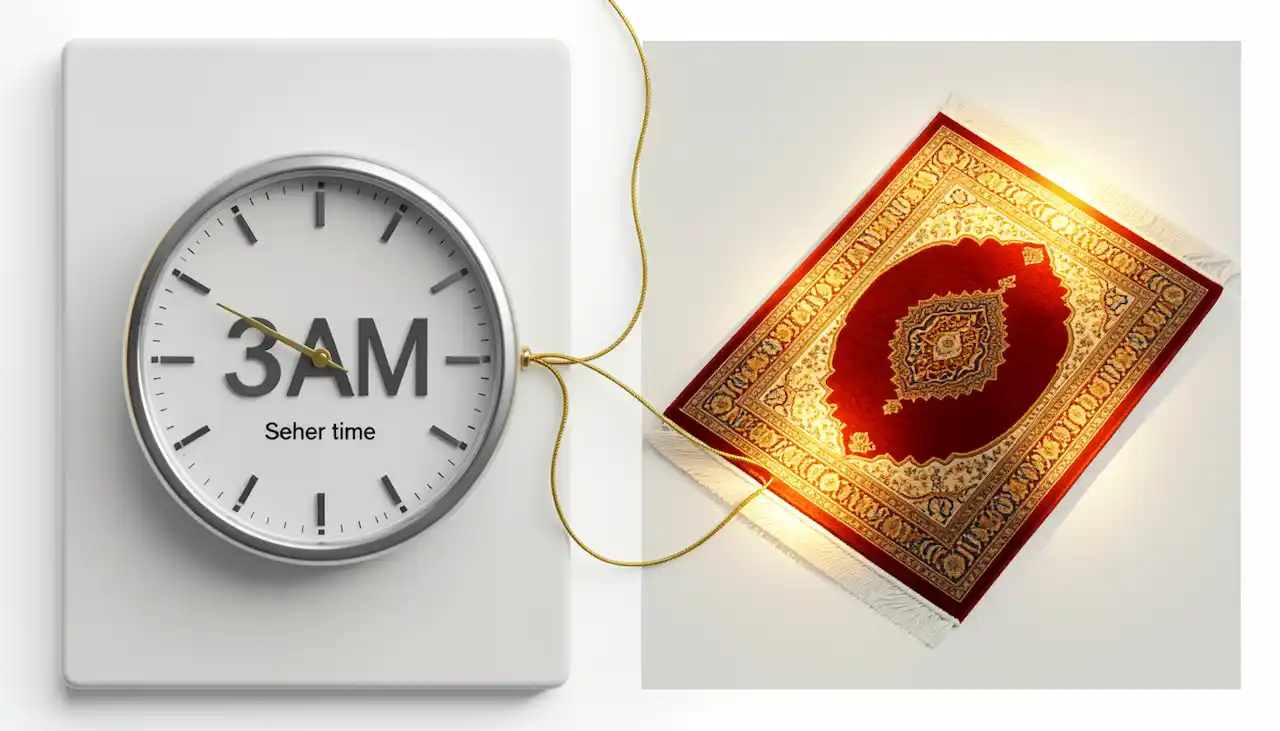
Within time, there are slices such that the doors of mercy open wide during these moments. Islamic scholars describe the dawn hours—the last third of the night—as 'hours of acceptance.' A petition made in that silent time when everyone is asleep finds the highest resonance in the divine presence. The time between the Adhan and the Iqamah, that hidden 'hour of acceptance' on Friday, the moments when rain falls upon the earth as a blessing, and that absolute proximity at the moment of prostration (sujud) are sacred stops where the probability of prayer being turned away is lowest. Utilizing the abundance of time is a wise spiritual strategy.
Praise and Salavat: The Wings of Prayer
The language and construction used while praying also have an aesthetic. Starting speech by praising Allah and immediately following it with salat and salam upon our Prophet (PBUH) are spiritual courtesies that increase the chance of the prayer's acceptance. Islamic scholars emphasize the principle: 'A prayer made between two accepted prayers (praise and salavat) will not be rejected.' When a person begins speech by confessing their own sins and flaws, they lift the veils of arrogance in their heart. Ending the prayer again with salavat and praise means sealing that request and allowing it to rise to the heavens.
Persistence and Patience: The Wisdom of Being Insistent in Asking
Being hasty while praying and abandoning the process by saying 'I prayed but I saw no response' is a spiritual heedlessness that is the greatest obstacle to prayer. In Islamic terminology, ilhah (being persistent) is a stance that Allah loves. Knocking on a door repeatedly is an indication of the need for that door and of loyalty. Being persistent in one's request but at the same time showing contentment with destiny by saying 'Give me what is best for me' provides the balance in prayer. The delay of acceptance is sometimes a divine grace that wants the servant to remain in that state.
Psychological Healing and Submission Coming with Prayer
While modern psychology defines the healing effects of prayer on the individual as 'positive expectation' and 'mental release,' from an Islamic perspective, this is more than a relaxation—it is a state of submission to the absolute will. This submission means that the human transfers the heavy burdens on their own shoulders to the True Owner, which is the greatest guarantee of mental health. A praying mind is purified from future anxiety and begins to notice the divine grace within the moment. This is an ancient metaphysical shield against the spiral of loneliness of the modern age.
Conclusion: The Self Reconstructed Through Prayer
In conclusion, prayer is an art; it is a letter written with the language of the heart and signed with the seal of the soul's sincerity. Using this spiritual communication channel appropriately is to build an unshakeable inner fortress against life's hardships. For the acceptance of your prayer, open not just your hands but your entire being to divine mercy. Remember that every prayer whispered with sincerity surely finds a response in the depths of the Throne and returns to your life in the most auspicious form when the time comes. Never grow weary of praying; for prayer is the servant's unending and most intimate conversation with their Lord.

Daily Prayers & Dhikr: Dua Guide — Experience This Now
Download our app to explore all these features and more.