Comparative Quran Translation: A Guide to Hermeneutic Analysis and Reflection
Meaning-Oriented Reading: The Path from Word to Meaning
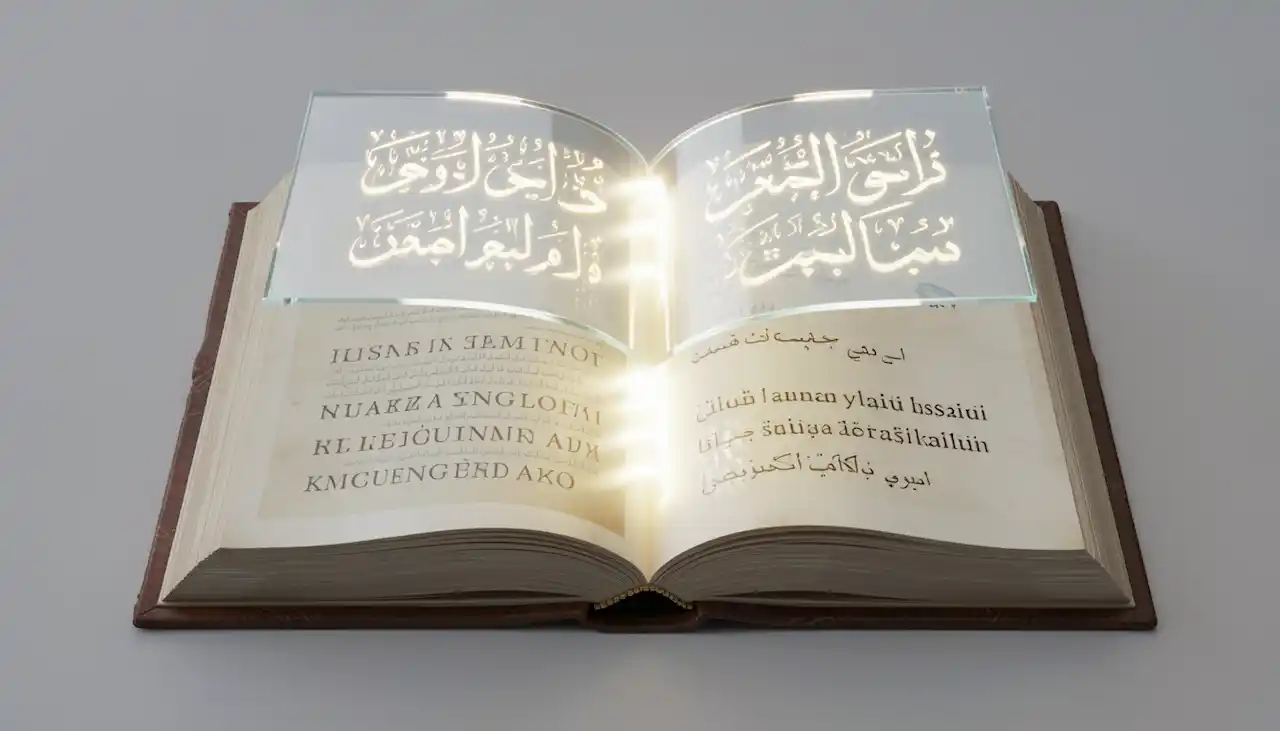
The Holy Quran is not just a text to be voiced; it is a divine instruction commanded to be contemplated (tafakkur) upon every word. From an academic perspective, Quranic reading should be built on three pillars: the Arabic original (Lafz), the Latin-script transcription (phonetic aid), and the English translation (Meaning). Presenting this triple structure comparatively allows the reader to recite 'knowing what they are saying.' Comparative reading is a hermeneutic process aiming to decipher not just the surface of the text, but its deep structure. The word that meets meaning manifests as light in the heart.
The Arabic Original: The Original Source of the Sacred Sound
In the Islamic faith, the Holy Quran is a miracle not only in its meaning but also in its Arabic wording. The points of articulation (makhraj) and the rules of tajwid constitute the phonetic miracle of the text. Academic linguistic research confirms that the Quran’s unique rhythm (prosody) has a balancing effect on the human nervous system. Reading while looking at the Arabic text trains the eye with the aesthetics of divine geometry, while following the original sound tunes the mind to the divine frequency. The original text serves as the purest and most uncorrupted 'DNA' of meaning. Every letter is a gateway.
Pedagogical Limits of Latin-Script Transcription
For those who have not yet fully mastered reading Arabic, Latin-script transcriptions serve as a 'temporary bridge.' However, academically, the limits of this method must be known; the Latin alphabet cannot fully represent specific Arabic sounds like 'kha, sad, dad.' At this point, the 'audio recitation' support offered by digital systems should intervene to complete the visual deficiency with auditory accuracy. Transcription should be positioned as a pedagogical step used not to distance the student from the original text, but to acclimate them to it faster. Chasing the sound solves the secret of the letter.
Translation Literacy: The Semantic Journey of Words
Reading a Quranic translation (meal) is more about partnering in an 'effort of meaning-making' than reading a mere translation. The rich semantic field contained in Arabic words sometimes cannot be met by a single English word. During comparative reading, looking at the Arabic root of a word and matching it with its meaning deepens the individual’s process of 'internalizing the meaning.' Meaning literacy at an academic level also takes into account the reasons for revelation (asbab al-nuzul) and contextual relationships. Meaning is the soul of the word; just as a body without a soul cannot live, a recitation without meaning cannot fully bear fruit.

Verse-by-Verse Reflection and Cognitive Resonance
Turning Quranic reading from a 'speed race' into a 'discovery of meaning' is a return to the essence of Islam. Comparative presentation allows us to stop after each verse and think about what that verse says to our lives (reflection). This situation, called 'cognitive resonance' in psychology, is the vibration of the read information with the individual’s existing structure of belief and morality. A believer reading the cry 'O you who believe' can only feel that this address is directly made to them through the semantic clarity provided by comparative reading. Reflection is the washing of the mind with light.
Linguistic Analysis: The Etymological Depth of Words
Some key concepts used in the Holy Quran (e.g., Taqwa, Patience, Hamd, Shukr) carry meanings far beyond their simple counterparts in daily language. In the comparative system, seeing the original forms of these words and comparing them with their meanings allows for tracking the etymological development of the words. In academic exegeses, the meanings a word gains in different contexts within the Quran (wujuh and naza'ir) is one of the greatest branches of science. A reader using this method begins to notice patterns between verses over time and witnesses the Quran’s 'self-interpreting' feature.
Multiple Translations and Comparison Strategies on Digital Platforms
Seeing the translations of different scholars and exegetes side by side is a revolutionary opportunity to grasp the richness of the text. One translator may translate a word as 'peace' while another translates it as 'security'; this is not a contradiction, but a reflection of the multi-dimensional nature of the text. Digital tools perform this comparison in seconds, saving the reader from being condemned to a single perspective. Academic impartiality and a wide vision are the sturdiest provisions on the journey to understanding the Quran. Diversity allows us to see different faces of the truth.
Conclusion: The Intersection of Science and Worship
In conclusion, comparative Quranic translation and Arabic recitation is a magnificent synthesis combining science with worship, sound with meaning, and the past with the present. Readings performed with this method take the individual out of mechanical repetition and lead them to a living and building consciousness of faith. Patiently descending to the roots of words, listening to the rhythm of sounds, and getting lost in the depths of meaning is the greatest intellectual and spiritual victory of a believer in the world. Remember that the Quran is a living interlocutor; however you approach it, it opens its doors to you accordingly. Now is the time to look at the luminous climate of the verses with a comparative eye.

Holy Quran: Translation & Arabic (Offline) — Experience This Now
Download our app to explore all these features and more.