Challenges When Starting Quran Reading and a Guide to Overcoming Psychological Barriers
Dismantling Mental Barriers: Psychological Preparation in Quranic Learning
While many people carry the desire to learn the Holy Quran in their hearts for years, they often trip over invisible obstacles when it comes to taking action. These obstacles are usually not external, but mental. Sentences like 'I am too old to learn,' 'My tongue can't pronounce it,' or 'I don't have time' are actually defense mechanisms. Yet, in spiritual development, there is no limit to time or age. In this guide, we will address the psychological barriers that stall the **learning process** from an academic and motivational perspective.
The first and greatest misconception is the perception that Arabic is impossibly difficult. In fact, the Arabic alphabet is much more systematic and rule-based than the Latin alphabet. Most of the 28 letters are based on similar geometric forms and are distinguished only by the number of dots. Our brains are programmed to recognize such patterns. By using **computational learning** techniques to break the subject into small pieces, the 'large and difficult' whole is divided into manageable parts. Learning just three letters a day will significantly lighten that heavy burden in your mind within a week.
Another major issue adults experience is the fear of making mistakes. The hesitation regarding mispronouncing or confusing letters breaks the motivation to try. However, it must not be forgotten that in the Islamic tradition, every effort on the path of knowledge is sacred. Making mistakes is a natural phase of learning. Modern tools that offer **vocal pronunciation** support allow individuals to practice alone, without fear of judgment. The freedom to make mistakes is the greatest gateway to permanent learning.
The most popular excuse of the modern era, 'lack of time,' is actually a problem of prioritization. Instead of hours spent in traffic to go to a course, the mobile solutions brought by technology can be utilized. Dedicating just a small portion of the time spent on social media daily to **mobile learning** processes yields revolutionary results. Short repetitions done on the bus, during breaks, or just before sleeping ensure the information is transferred to 'long-term memory.'
For motivation to be sustainable, 'progress tracking' is of vital importance. If a person does not see concretely how far they have come, they tend to abandon the learning process halfway. Elements like level progress, completed lesson reports, and achievement badges increase the dopamine effect, encouraging the individual to take the next step. A **gradual curriculum** structure keeps your spiritual journey alive by making you feel that you know more every day than the day before.
Community support and spiritual motivation factors should not be ignored either. Someone trying to learn alone might give up at the first hurdle. However, a content design that feeds the learning process with prayers, hadiths, and the Beautiful Names of Allah (Asma-ul Husna) positions the person not just as a 'language learner' but as a traveler on the path of maturity. This transforms technical knowledge into a **spiritual discipline**, sanctifying the process.
In conclusion, learning the Holy Quran is a matter of intention rather than a technical skill. Scientific data proves that the brain can establish new connections at any age (neuroplasticity). When you recognize your psychological barriers and combine them with digital conveniences, you will see how light that first step you've postponed for years actually is. Silence your mind and focus only on the first letter, Alif; the rest will follow naturally.
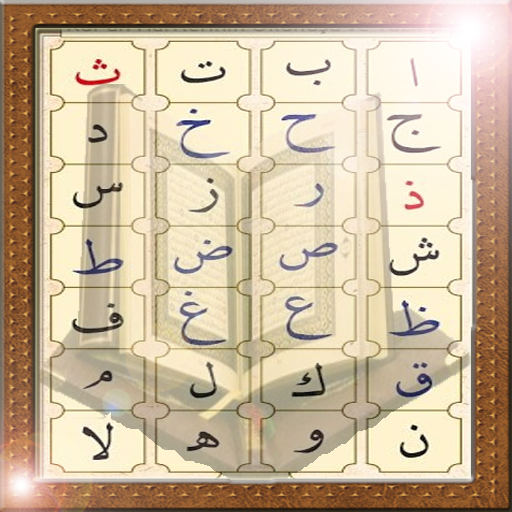
Learn Quran with Audio Elif Ba — Experience This Now
Download our app to explore all these features and more.