The Central Role of the Arabic Language in the Quran and Islamic Culture
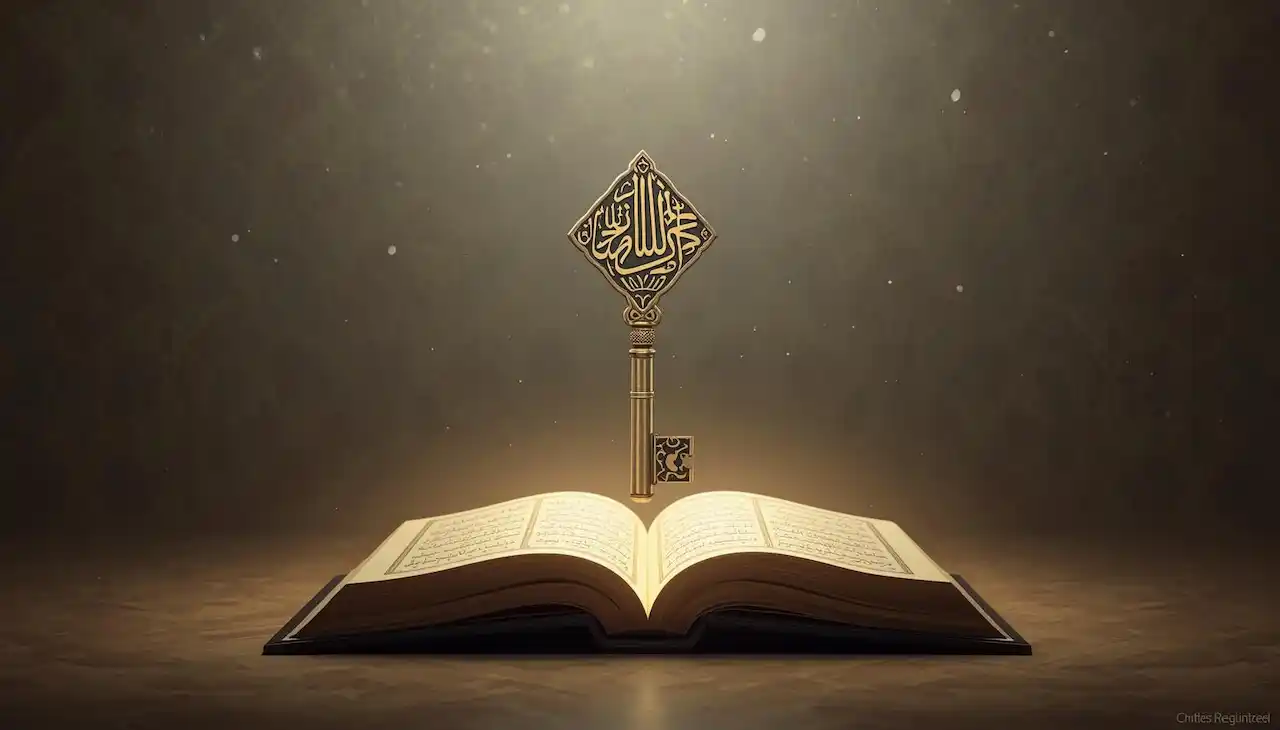
Arabic: The Miraculous Language of the Quran and the Universal Carrier of Islamic Civilization
In Islamic theology and from a historical perspective, Arabic is far more than a mere tool for communication; it is a sacred and chosen language through which divine revelation was sent down to Earth. Being the original language of the Holy Quran makes this tongue not just a lexicon for Muslims, but a part of faith and a cornerstone of worship. Every verse, every word, and even every letter embodies the unique characteristics of Arabic balaghah (eloquence), i’jaz (inimitability), and fasahah (fluency). This language is a living bridge that keeps the Ummah’s bond with revelation unbroken. Our Prophet (PBUH) advised his community to recite and understand the Quran in Arabic and to master its subtleties. This is because Arabic possesses a mathematical and literary depth capable of preserving even the most delicate nuances of the divine message.
The Shared Language of Science and Culture in Islamic Civilization
For centuries, Arabic reigned as the language of science across a vast geography stretching from Baghdad to Andalusia, and from Samarkand to Cairo. The immense heritage of Islamic civilization—hadith corpora, jurisprudential methodologies, and exegetical depths—was largely penned in this language. Arabic united Muslim scholars of diverse ethnic backgrounds around a common terminology; thousands of thinkers, from Ibn Sina to Al-Ghazali, produced works using the possibilities of this language, building a global cultural legacy. This language is the intellectual memory of the Islamic world. Knowing Arabic means unlocking the door to a thousand-year-old library.

The Eloquence Miracle of Revelation and Spiritual Depth
The revelation of the Holy Quran in Arabic serves as proof that the language itself is a miracle. The multi-layered meaning structures found even in the shortest surahs are made possible by the grammatical richness and word-derivation capacity of Arabic. The concept known as I’jaz al-Quran is directly related to the rhetorical superiority of Arabic. For a Muslim, learning Arabic means penetrating the soul of the surahs recited in prayer and feeling the resonance of dhikr in the heart. Reciting the Fatiha during prayer with the depth of meaning found in its original tongue brings khushu (humility) in worship to its peak. When an individual grasps the meaning of a verse directly in that language, the heart becomes a direct addressee of the divine speech, accelerating spiritual transformation.
Arabic in the World of Science, Philosophy, and Logic
Arabic was not only the language of religious texts but also the universal language of science and philosophy throughout the Middle Ages. Ancient Greek philosophy was translated into Arabic; thousands of new terms in fields such as mathematics, medicine, and astronomy were introduced to global science through Arabic. The rules of nahw (syntax) and sarf (morphology) developed the logic and methodological skills of Muslim thinkers. Learning Arabic provides an individual with a disciplined thinking structure. Today, as the native language of over 400 million people, Arabic holds strategic importance in the modern world as one of the official languages of the United Nations. This language, which reinforces the bonds of brotherhood among Muslims on a linguistic foundation, is the most reliable key opening toward revelation.
Learn Arabic: Audio Lessons — Experience This Now
Download our app to explore all these features and more.