10 Critical Topics to Boost Your Score in AYT Literature and Question Analysis
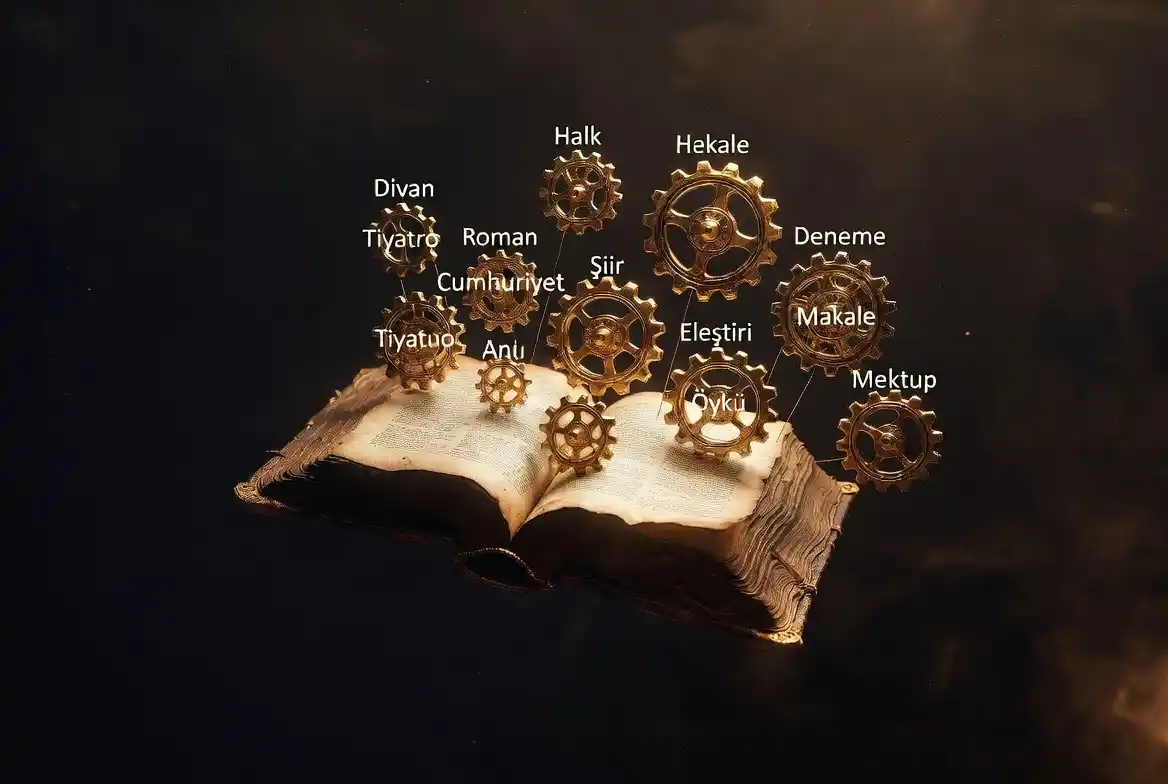
Strategic Depth and Question Analysis in the Literature Exam
The AYT literature test, one of the most decisive turns in the university exam marathon, measures not only the candidates' level of knowledge but also their capacity to synthesize that information. From an academic perspective, there are specific thematic focal points that appear prominently every year. At the forefront of these is Divan literature, which, with its complex terminology and diversity of artists, serves as the very heart of the exam. Grasping the structural characteristics of verse forms like gazel, kaside, and mesnevi is not just a process of memorization, but a process of mentally encoding the aesthetic understanding of that era.
Stages of Westernization: Mental Transformation from Tanzimat to Servet-i Fünun
The progression of Turkish literature under Western influence encompasses a broad spectrum of change stretching from the Tanzimat to the Republic. In this process, knowing the differences in mindset between the first and second periods of Tanzimat, in particular, allows you to solve comparison questions that may appear in the exam in mere seconds. Following the chronological transition from social themes like rights and justice in poetry to individual anguishes is of vital importance for understanding literary evolution. Analyzing how the principle of 'art for art's sake' during the Servet-i Fünun period reflected on the language and the world of imagery will take your text interpretation skills to the highest level.
Republic Era Poetry Groups and Poetic Analysis
Republic Era Turkish poetry is one of the most voluminous and highest-scoring sections of the exam. The sharp lines that distinguish the poetics of groups such as the Yedi Meşaleciler, the Garip movement, the Second New, and the Blue movement are among the key pieces of information that will carry your scores to the top. Being able to determine which literary group a poem belongs to by looking at its language, world of imagery, and verse structure is an indicator of academic competence. Sensing the difference between the abstract world of the Second New and the concrete discourse of the Socialist Realists is the key to the most selective questions.
Folk Literature: Technical Codes of a Millennium-Old Tradition
Folk literature, with its richness in anonymous, ashik, and tekke-Sufi branches, is an indispensable part of the exam. The syllabic meter patterns and caesura (durak) structures of genres like koşma, semai, and ilahi sit at the center of technical knowledge questions. In particular, the characteristic styles of names like Karacaoğlan, Yunus Emre, and Dadaloğlu will be your greatest helpers in questions that ask you to find the artist based on work excerpts. Knowing the similarities and differences between the 'mazmuns' (clichés) of Folk literature and Divan literature provides an interdisciplinary perspective.

Literary Devices: The Art of Unveiling Textual Layers
Literary genres and devices are the fundamental building blocks of the literature test. Grasping the functions of devices like simile (teşbih), metaphor (istiare), and metonymy (mecaz-ı mürsel) within a text requires much more than just knowing a definition. To achieve success in the exam, analyzing the applications of these devices in modern poetry samples provides a cognitive advantage. Literary devices are like hidden ciphers that unveil the world of emotion behind the text. Understanding not just the name of the device but why the author resorted to it reinforces your power of interpretation.
Novel Summaries and Character Typologies: Analytical Reading
Focusing on novel summaries and hero typologies is inevitable for exam success. Academic notes that analyze the conflicts, use of space, and the psychological depth of characters in the masterpieces of Turkish literature allow you to correctly interpret long paragraph questions. The character spectrum stretching from Bihruz Bey to Zehra, from Mümtaz to Selim Işık, is a mirror of social changes. Knowing which movement influenced a novel (Realism, Naturalism, Modernism) makes it easier to grasp the plot.
Movement Theories and World Literature Interaction
Literary movements are not just lists of names; they are the philosophical ground of literature. Knowing the fundamental philosophies of the processes from Classicism to Postmodernism allows you to understand the spirit of the texts. Knowing the effects of Western artists on Turkish literature (for example, Baudelaire's effect on the understanding of pure poetry) is essential for solving 'general culture and interaction' questions in the AYT. Movements act as the invisible hand that guides the artist's pen.
Conclusion: Achieving Success with a Holistic Perspective
In conclusion, the way to high scores in the AYT Literature exam is not through dry memorization, but through grasping the logical sequence that connects the topics. A strategic study program requires seeing all these topics as parts of a whole and establishing an interdisciplinary bond. This process, supported by regular topic reviews and plenty of question-solving, will lead you to the success you dream of. Literature is the memory of a nation; those who read this memory correctly gain an intellectual superiority not just in the exam, but in life as well.
AYT Literature Topics & Work Summaries — Experience This Now
Download our app to explore all these features and more.