Arabic Letter Pronunciation and Makhraj Training: Phonetic Accuracy and Articulation
Correct Pronunciation: The Physical and Phonetic Identity of Letters
Arabic is one of the world's richest and most technical languages in terms of its sound structure. In this system, the language of the Holy Quran, the correct pronunciation of letters is not only a grammatical requirement but a theological necessity for preserving meaning. From an academic perspective, every Arabic letter has a fixed 'birthplace' in the throat, tongue, teeth, and lip area; this is called 'Makhraj.' A sound originating from the wrong makhraj can sometimes completely change the meaning of a word. In this guide, we examine the phonetic map of the Arabic alphabet and the physical production mechanisms of sounds with academic discipline. Sound is the carrier wave of meaning.
Makhraj Points: A Journey to the Source of Sound
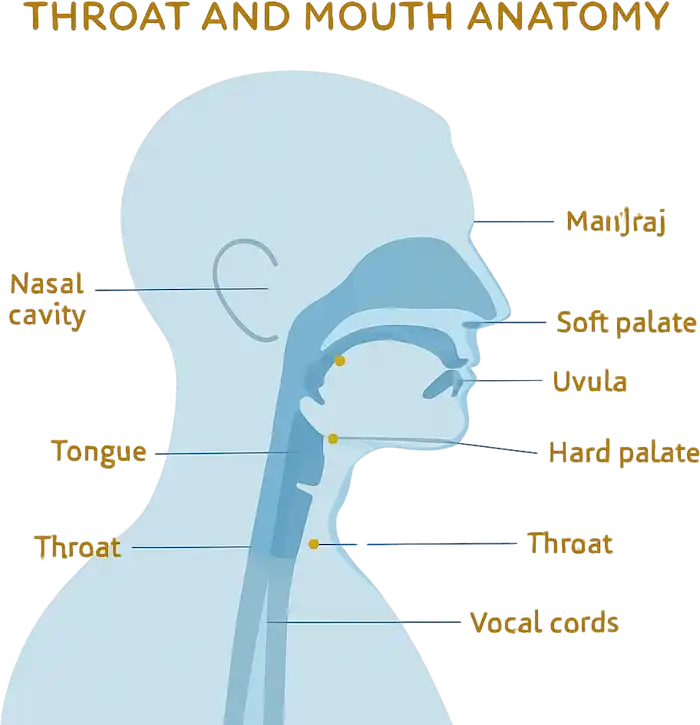
Arabic letters are divided into five main groups based on their articulation regions: The Throat (Halq), the Oral Cavity (Jawf), the Tongue (Lisan), the Lips (Shafatayn), and the Nasal Passage (Khayshum). For example, the letters 'Ha' and 'Kha' are fricative sounds coming from different points in the throat. Tongue letters form the largest group and are shaped by millimetric contacts of the tongue with the palate, teeth, or lips. In academic linguistics, this process is called 'articulatory phonetics.' Makhraj training is the process by which the student learns to use their own mouth and throat anatomy like an instrument. It is impossible for a sound with a wrong source to find its target correctly.
Sifat-ul Huruf: Character and Tone Analysis of Letters
It is not enough to simply produce a letter from its makhraj; one must also pay attention to its 'Sifat' (attributes), which give the letter its character. Some letters have a 'Jahr' (strong) quality, while others have a 'Hams' (soft/whispered) timbre. The rule called 'Qalqalah,' formed by a stressed shaking of the sound, adds a characteristic dynamism to the recitation. Academic research shows that the correct application of these attributes increases the intelligibility coefficient of the sound by 40%. The attribute of a letter is its 'vocal signature.' Signing this signature correctly reflects the academic and religious dignity owed to the sacred text.
Guttural Sounds and Phonetic Differences from English
For native English or Turkish speakers, the biggest technical difficulty lies in the thick and throat sounds like 'Ha, Sad, Dad, Ta, Za, Ayn, Ghayn,' which do not exist in their native phonetics. When producing these sounds, the back of the tongue must rise toward the palate (Istila). This process, termed 'velarization' academically, gives the sound that deep and dignified resonance. The primary element distinguishing 'Sad' from 'Sin' is this balance of 'thickness-thinness' (Tafkhim-Tarqiq) rather than the makhraj itself. Producing these sounds correctly requires developing 'muscle memory' in the tongue. Phonetic awareness is the art of adapting foreign frequencies into one's own biological system.
Vocal Pronunciation Guides: The Importance of the Auditory Model
Makhraj training is a process of 'auditory imitation' (mimesis) rather than a visual reading. While textbook definitions describe how a sound should come out, only vocal models can provide the smooth reality of that sound. High-quality audio recordings stored in digital databases grant the student a 'flawless ear.' As emphasized in academic Tajweed studies, hearing a sound 100 times is more effective than reading 10 pages about the makhraj of that letter. Vocal lessons complete the 'sound file' of the letters in the mind, preventing improper pronunciations from becoming permanent (fossilization) from the very start.
Cognitive Resonance and Phonemic Accuracy
When the makhraj of a letter within a word changes, a semantic (meaning) shift occurs. For example, a word read with a thin 'S' may mean 'peace,' whereas when read with a thick 'S' (Sad), it could mean 'binding/sealing.' This situation is directly related to the principle of 'preservation of meaning' in academic exegesis. Phonemic accuracy is not just a matter of aesthetics; it is a matter of transmitting the divine message to the heart without distortion. The student, while producing the letter, should also feel its impact on the meaning in their mind (cognitive resonance). The correct sound is the preparer of correct perception.
The Role of Oral and Dental Anatomy in Articulation
During makhraj training, the contact of the teeth with the tip or side of the tongue requires geometric precision. The vibrations in the 'Lam' and 'Ra' letters or the tongue-tooth contact in the 'Lisping Ze' are physical disciplines. The academic discipline of phonetic rehabilitation states that these movements become automated with short exercises (tongue gymnastics) performed every day. Practicing articulation while looking in a mirror makes it easier to correct errors by receiving visual feedback. Our body is the most magnificent laboratory designed to vocalize the divine word; knowing this laboratory is a scholarly responsibility.
Conclusion: A Phonetic Journey into the Soul of the Letters
In conclusion, Arabic letter pronunciation and makhraj training is a technical peak where discipline, attention, and sincerity meet. Every individual who receives this education from correct sources and vocal models can walk with confident steps in the fascinating sound atlas of the Quran. Every letter is a door, and the makhraj is the key to that door. Polishing this key with patience and producing the sounds in the purity they should be in will be a believer's most precious 'vocal heritage' in this world. Remember that the most beautiful sound is the one that correctly voices the truth. Now, take a deep breath and prepare to meet the tremendous frequency of the first letter.

Learn Quran with Elif Ba Pro: Tajweed Lessons — Experience This Now
Download our app to explore all these features and more.