Animated Baby Sleep: Multisensory Stimulation and Cognitive Serenity

Visual and Auditory Peace: The Process of Sensory Integration
The transition to sleep in babies is not just about closing the eyes; it is about filtering all external stimuli in the mind to reach internal serenity. In modern pedagogy, 'Animated Sleep Techniques' aim to support the baby's auditory attention with a visual focus, effectively disabling external noises that trigger alertness. This method, academically termed 'Multisensory Integration,' is based on the principle of presenting sound and image in a synchronized rhythm. Correctively constructed visual content lowers stress hormones and prepares the brain for the sleep phase by trapping the baby's attention in a 'hypnotic' flow.
Neuro-Psychological Effects of Visual Flow
The speed and color palette of animations used before sleep have a decisive impact on the baby's nervous system. Academic research has proven that slow-moving objects, pastel tones (indigo, pale yellow, mint green), and soft transitions stimulate alpha waves in the brain. Unlike standard videos containing fast scenes and vivid colors, sleep-oriented animations offer a 'minimalist' aesthetic. Stars gliding slowly across the sky or swaying clouds rest the baby's eye muscles (extraocular muscles) without fatiguing them. Visual flow serves as a digital lullaby that allows the mind to downshift.
Cognitive Advantages of Sound and Image Synchronization
The baby's brain analyzes the link between the sound it hears and the movement it sees within seconds. A light blinking or a figure swaying in harmony with the rhythm of the lullaby strengthens the connections between the 'visual-auditory cortex' in the brain. This does more than just facilitate falling asleep; it also supports cognitive intelligence by developing the baby's 'expectation and prediction' mechanisms. An academic-level design matches the frequency of the sound with the speed of the visual movement with millimetric precision. This harmony serves as cognitive anchors that allow the baby to code the world as an 'ordered and safe' place.
Melatonin Secretion and Light Spectrum Management
The biggest concern with digital screen use is the 'blue light' factor suppressing melatonin secretion. However, animations optimized for sleep minimize 'blue light' through spectral filtering and prioritize 'amber' and 'red' wavelengths. Academic biology data confirm that low-intensity warm colors do not disrupt the sleep cycle; on the contrary, they support the biological clock. Setting the screen brightness to the lowest level and ensuring the content is viewed from a certain distance (at least 1.5 meters) constitutes the safe boundaries of this technical preparation. Correct light is the preparer for deep sleep.
From Distraction to Focused Relaxation
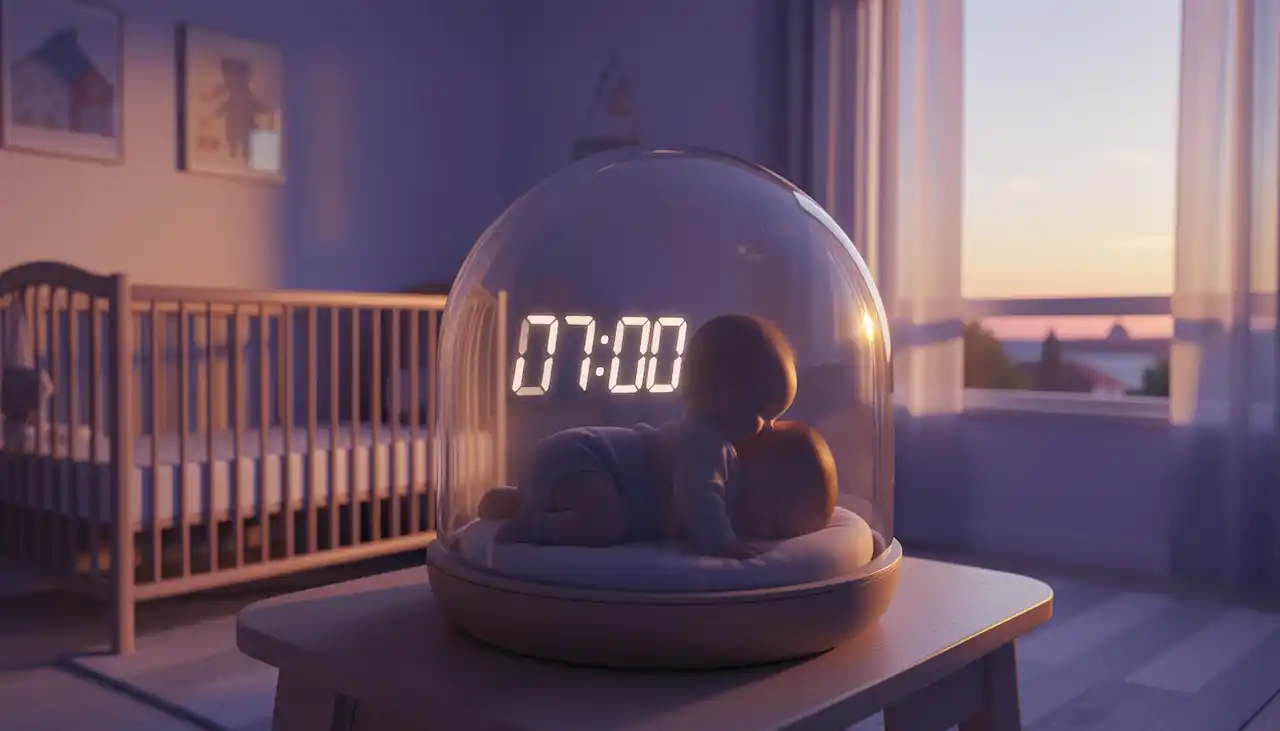
When babies are tired, they often exhibit hyperactive restlessness (overtiredness). At this stage, simply laying the baby down might trigger crying fits. Animated lullabies calm this 'overstimulated' mind by channeling it toward a single point. Academically, the 'Selective Attention' mechanism comes into play; when the baby focuses on the slow movement on the screen, they forget other stimuli in the surroundings. This state of 'focused relaxation' creates a neuro-biological effect similar to the 'mindfulness' state in yoga or meditation. When the mind calms, the body surrenders.
Parental Involvement and Interactive Sleep Experience
The use of technology gains meaning with the parent's involvement in the process. The physical contact (hugging, back stroking) and low-voiced accompaniment of the parent while watching animated lullabies transform technology from a 'cold screen' into a tool for a 'warm bond.' Academic studies show that digital content supported by parental involvement reduces the risk of technology addiction in babies by 60%. Technology should be positioned as a helpful assistant that visualizes the parent's affection. Human touch is the most powerful animation.
Digital Hygiene and Usage Limits
Even if sleep-oriented, the use of animated content must remain within a certain 'time discipline.' Academic pediatric guides recommend turning off the screen at the moment of falling asleep and continuing sleep in total darkness. Animation should only be a tool used in the 'transition' stage. It is vital for 'cognitive hygiene' that the content is ad-free and contains no sudden sound bursts. By using 'auto-off' or 'sleep timer' features on smart devices, the baby's exposure to the screen throughout the night must be prevented. Discipline is the guardian of health.
Conclusion: Subjugating Technology to Pedagogy
In conclusion, animated baby sleep methods—when used with the right content, the right color spectrum, and the right timing—are one of the most powerful helpers of modern parenting. These luminous contents, combining visual and auditory aesthetics, can transform your baby's sleep room into a palace of peace. In the light of scientific data, use technology not as an escape route but as a developmental support unit. Remember, the most beautiful dream is the sleep dived into with peace. Now dim the lights, turn on your softest lullaby, and watch your baby reach serenity in that magical visual world.
Lullabies for Babies Pro: Animated Sleep Aid — Experience This Now
Download our app to explore all these features and more.