Anatolian Lullabies and Modern Sleep Sounds: Traditional Wisdom and Scientific Frequencies
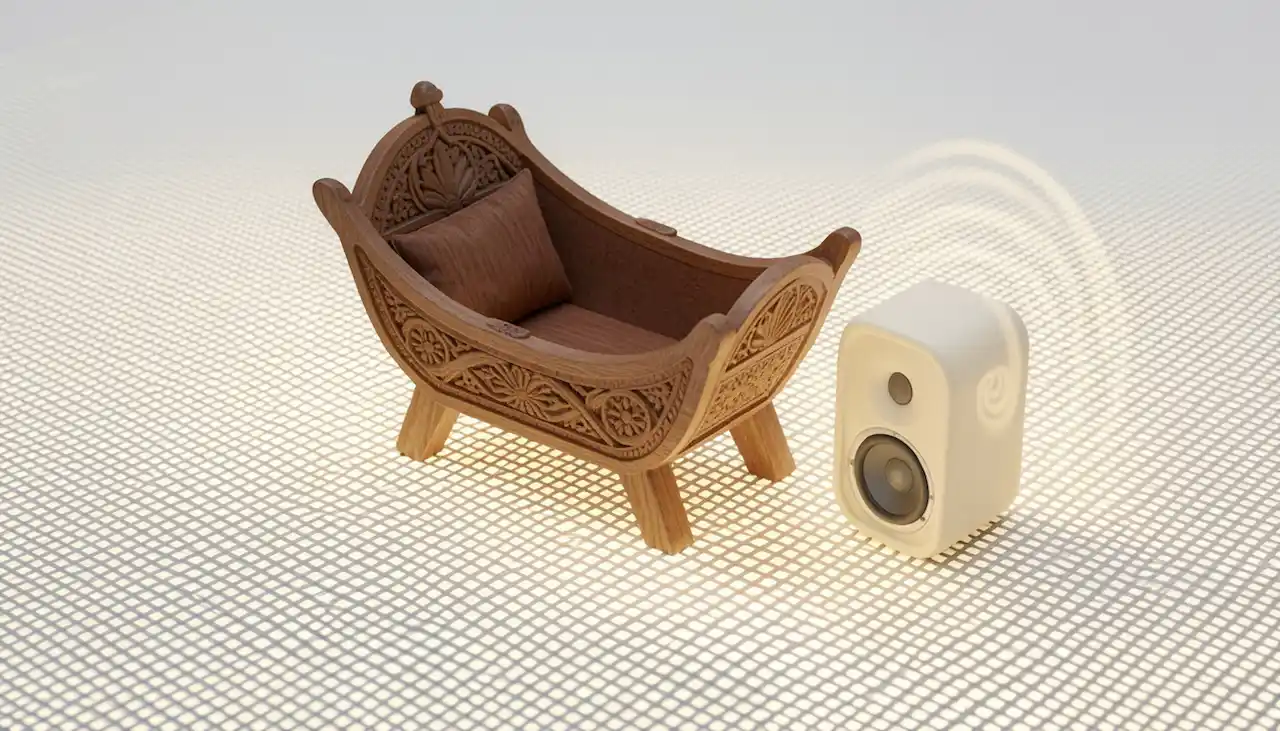
Cultural Heritage: The Anthropological Depth of Anatolian Lullabies
Anatolian geography is the world's richest 'phonetic museum' regarding lullabies. For thousands of years, the 'ee-ee' sounds spilling from mothers' lips in these lands are not just sleep melodies; they are genetic codes carrying the beliefs, pains, prayers, and child-rearing philosophies of a society. From an academic perspective, Anatolian lullabies are the most refined products of ethnomusicology. The modal structure in these lullabies (Segâh, Uşşak, Hüseyni) contains frequencies that appeal to the deepest layers of the human soul, with 'soothing' properties scientifically proven. Traditional wisdom succeeded in 'tuning' the infant's mind long before modern science.
Modern Sleep Sounds: Acoustic Solutions for the Digital Age
With the advancement of technology, concepts such as 'white noise,' 'pink noise,' and 'nature sounds' (rain, forest, ocean) have entered the literature of putting babies to sleep. These modern sounds act as an 'acoustic shield' that allows the baby to be isolated from the chaotic noise of the outside world (traffic, construction, loud conversations). Creating a 'masking' effect academically, these sounds prevent sleep interruption by raising the baby's threshold of wakefulness. Modern sleep sounds are 'phonetic medicines' developed in laboratory settings with frequencies adjusted to the millimeter. Science has redefined the work of the lullaby in the language of engineering.
Comparative Analysis: Modal Timbre or Static Frequency?
The most distinct difference between Anatolian lullabies and modern sleep sounds lies in the balance of 'emotional intensity' and 'cognitive load.' Traditional lullabies respond to the baby's need for 'attachment' through the human voice (vocals) and instrumental richness they contain. Modern sounds, however, provide purely 'technical isolation.' Academic research shows that both methods have their own unique advantages; while lullabies facilitate the 'transition to sleep,' sounds like white noise support 'sleep sustainability.' The ideal is to combine these two worlds, offering the baby both spiritual affection and technical comfort at the same time.
The Mathematics of Sound: Healing Rhythms in Lullabies
The common denominator of lullabies is generally 4/4 or 2/4 simple and repetitive rhythms. This rhythm is in perfect harmony with the mother's heartbeat (approximately 60-80 BPM) that the baby heard for months in the womb. Scientifically, this state is called 'entrainment' (the external rhythm pulling the internal biological rhythm toward itself). In Anatolian lullabies, this rhythm is also brought to a physical dimension by the mother rocking her knee or pushing the cradle. Modern sounds offer more of a 'continuous and static' flow. This continuity creates an unshakeable acoustic ground that prevents the brain from waking up by asking, 'did a new sound arrive?'

Etymological and Cultural Symbolism: From 'Dandini' to 'Hu'
The lyrics in Anatolian lullabies carry the character of 'life lessons.' While anonymous rhymes like 'Dandini dandini dastan' are phonetic exercises supporting language development, religious and Sufi lullabies (Hu Hu Hu Allah) sow the first spiritual seeds in the baby's subconscious. Academic anthropology studies emphasize that these lullabies are also a tool for 'psychological healing' (catharsis) for mothers; the woman calms down by pouring her troubles into the lullaby, and this tranquility is passed on to the baby. In modern sleep sounds, this 'narrative and emotional' dimension is missing; the focus is entirely on 'physical relaxation.'
Digital Transformation: Traditional Sounds in Modern Technology
In the world of 2026, Anatolian lullabies and modern sleep sounds can now meet on a single digital platform. High sound quality (Lossless audio) carries those finest modal details and the human breath to the baby's ears in its most natural form. Academic-level sound engineering can blend these lullabies with 'spatial audio' technology to create a 360-degree 'security cocoon' around the baby. Tradition does not die with these immense possibilities offered by technology; on the contrary, it shines even brighter and becomes a guest in the dreams of future generations. Technology is the new carrier of ancient healing.
Choosing Sounds for Babies of Different Temperaments
Every baby has a unique 'temperament.' While some babies calm down more easily with melodic and verbal lullabies (high interaction need), others may only need pink noise because they are startled very quickly by external sounds. Academic developmental psychology advises parents to 'observe their babies acoustically.' If your baby becomes restless in your arms while a lullaby is playing, perhaps what they need is just the rhythmic rustle of the wind in nature. Flexibility is the greatest competency of modern parenting. Respect your baby's rhythm and discover the most suitable sound atlas for them.
Conclusion: Offering the Best of Both Worlds
In conclusion, Anatolian lullabies and modern sleep sounds are not rivals but complements. In one lies the timbre of thousands of years of experience and love; in the other, the precision of modern science and engineering. It is in your hands to fill your baby's sleep room sometimes with the peace of an Anatolian village and sometimes with the stillness of an ocean shore. The important thing is that whichever method you choose, you do so with great patience and awareness. Remember that the most powerful lullaby is the one sung with love and supported by science. Now is the time to enlighten your baby's dreams with this unique synthesis.
Lullabies & Sleep Music: Peaceful Sleep Guide — Experience This Now
Download our app to explore all these features and more.