Digital Tasbih or Traditional Beads? Modern Worship Tools
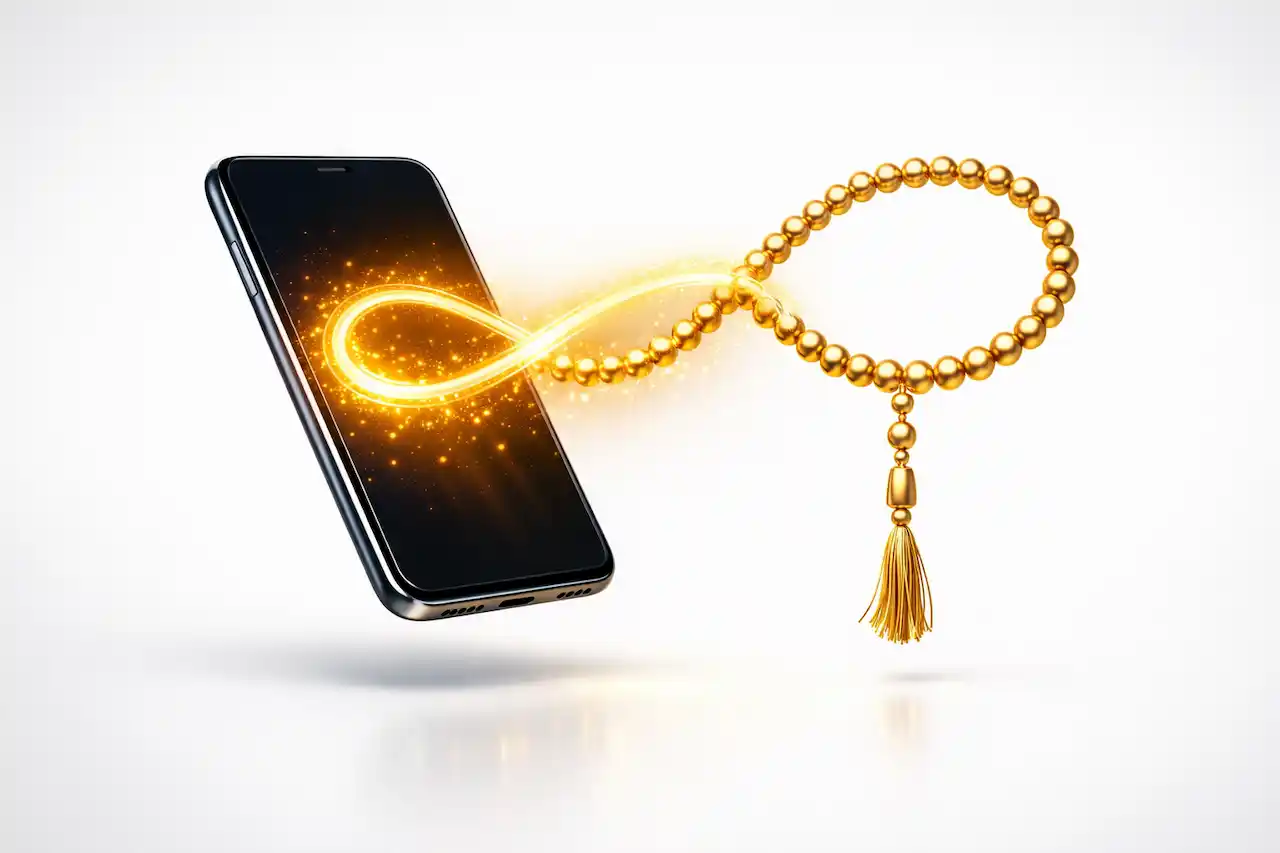
Modern Worship Tools: An Aesthetic Synthesis of Tradition and Technology
The act of pulling tasbih, one of the indispensable elements of worship practice, has undergone a broad evolution throughout history—from date pits to knotted strings, from handmade amber beads to today’s digital solutions. From an academic standpoint, the change in the tool used in worship is considered an ease (rukhsah) that strengthens worship discipline, provided it does not disrupt the nobility of intention and awe (khushu). The advantages offered by digital zikirmatiks (counters) are in complete harmony with the pace of life of modern humans and their daily routines intertwined with technology. Tradition is being reinterpreted through the possibilities of technology.
Automatic Recording and Spiritual Sustainability
One of the greatest advantages of digital zikirmatiks is undoubtedly the 'automatic recording' and memory feature. Remembering where you left off on a traditional set of beads can sometimes be difficult, especially within the chaos of daily life; however, a digital system allows you to continue your tasbihat exactly where you left off, even if days have passed. This feature provides sustainability, particularly for users trying to complete large daily units (wird) numbering in the thousands, such as 4444. Recording progress lightens the mental load, helping the person focus on the semantic depth of the dhikr rather than being overwhelmed by numbers.
Accessibility at Any Moment: Time Management and Continuous Dhikr
Accessibility anytime and anywhere is another critical benefit provided by digital tools. In cases where carrying physical beads is not possible or is forgotten, the transformation of the device in your pocket into a tasbih is a great blessing for time management. Whether on a bus, a ferry, waiting in a hospital, or between meetings, you can return to your spiritual world in seconds. This serves the Islamic ideal of 'continuous dhikr' (dhikr-i daim), sanctifying even the secular areas of life. Technology carries worship outside the mosque walls and into the heart of the street and work.
Attention Management: Vibration and Ergonomic Depth
Precise touches and vibrating feedback make the use of digital zikirmatiks highly ergonomic and effective. Vibration features that eliminate the need to look at the device's screen allow the user to close their eyes, turn to their inner world, and dive into spiritual depths. In terms of academic educational sciences, this is closely related to attention management and the skill of detaching from external stimuli. Technology here ceases to be a distractor and positions itself as a catalyst that allows the individual to cut their bond with the outside world and focus on the divine presence.

Spiritual Accounting: Awareness through Data and Statistics
The presentation of statistical data allows the user to track their spiritual development with concrete evidence. Daily, weekly, or monthly dhikr reports provide an opportunity to conduct a type of 'self-accounting' (murasabah). Seeing which name a person has chanted how much or during which periods they turned more toward spirituality creates a deep awareness of their own spiritual discipline. This feedback mechanism functions as a psychological motivation source and a self-audit tool in the process of habit acquisition. An individual who monitors their own progress remains more loyal to their goals.
Silent Worship and Protection of Privacy
The sounds traditional beads sometimes make can lead to one's worship being noticed in social environments, potentially damaging sincerity (ikhlas). Digital zikirmatiks, on the other hand, provide complete silence and privacy. Remembering Allah with just a touch of a fingertip without anyone noticing aligns perfectly with the principle of sincerity and secrecy. This secrecy reinforces the idea that worship remains only between the servant and their Lord, minimizing the danger of showing off (riya). In this sense, digitalization prepares a modern ground for the believer to protect their 'heart's secret.'
Offline Use and Uninterrupted Spirituality
Digital systems that can work even where there is no internet connection certify the location-independence of spirituality. Being able to continue your dhikr on a mountaintop, an airplane, or in a tunnel strengthens the consciousness of uninterrupted worship. Offline access breaks the feeling of 'dependency' that technology sometimes creates, keeping it at the level of a mere 'tool.' In this way, the device ceases to be a social media terminal and transforms into a loyal mentor assistant that is by your side under all conditions. The spiritual journey continues not with signal strength, but with the strength of faith.
Conclusion: Subjugating Technology for Good
In conclusion, digital zikirmatiks should be viewed not as cold rivals replacing traditional beads, but as technological servants that complement them and respond to modern needs. As long as the awe and sincerity at the core of worship are not compromised, these tools make the spiritual journey more orderly, easier, and more inclusive. Making technology a vessel for good and putting it at the command of the soul is one of the most important competencies of our age's understanding of religiosity. It should be remembered that the heart finds contentment in dhikr, and in the digital world, every path leading to this contentment is blessed.

Zikirmatik: 99 Names of Allah & Salawat — Experience This Now
Download our app to explore all these features and more.